
Best Greyhound Betting Sites – Bet on Greyhounds in 2026
Loading...
A Kilogram Can Change a Result
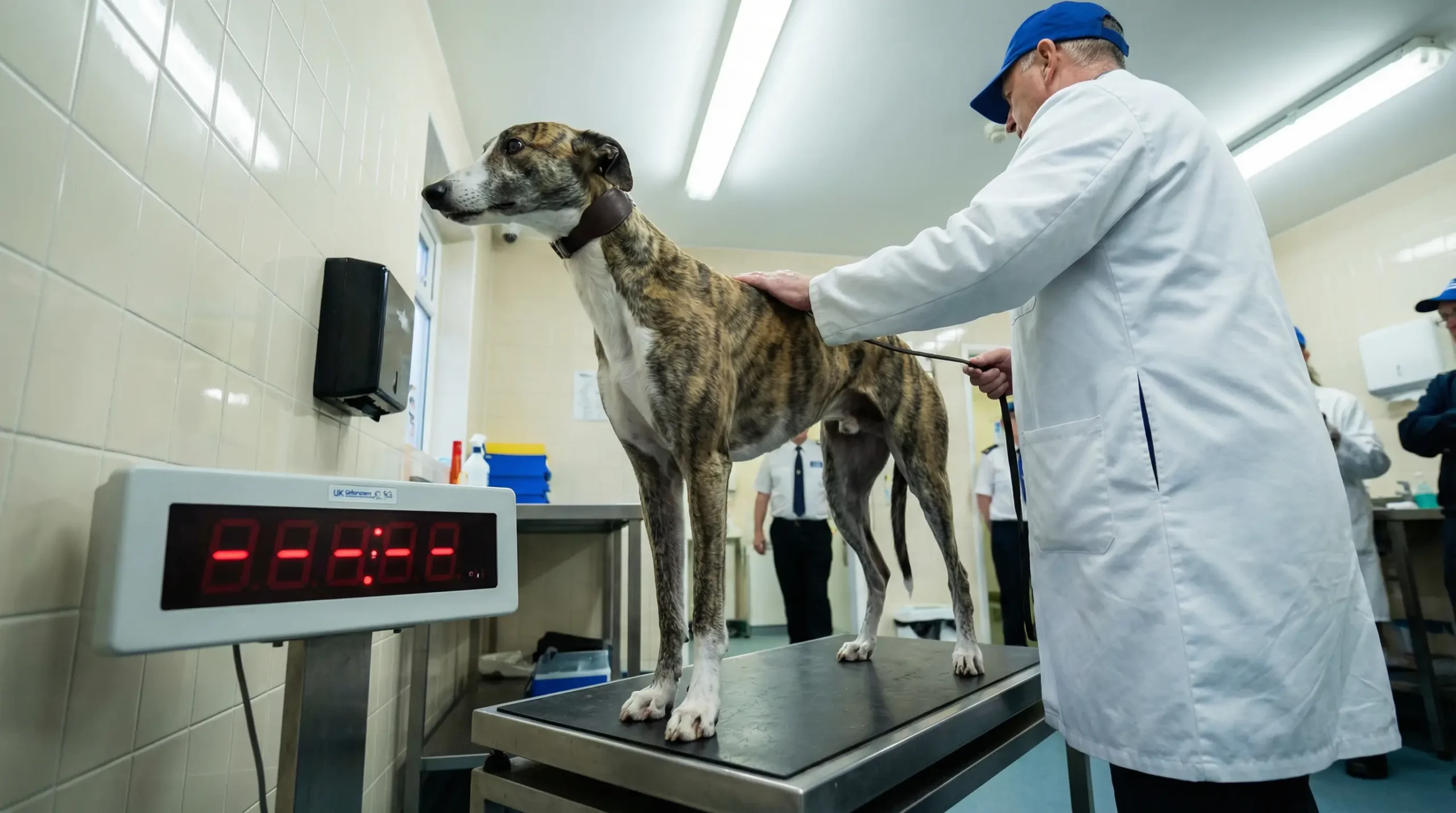
Every greyhound is weighed before every race. The weight is printed on the racecard alongside the dog’s name, trap number, and recent form. Most punters treat it as another piece of background data — noted, perhaps, but rarely analysed. This is a missed opportunity, because weight is one of the few racecard variables that provides a direct window into the dog’s current physical condition rather than its historical performance.
A greyhound’s race-day weight tells you something the form figures cannot: whether the dog is physically the same animal that produced those figures. A dog that ran 29.45 three weeks ago at thirty-one kilograms is a meaningfully different proposition if it arrives tonight at thirty-two and a half. The time is the same in the form column. The dog is not the same on the track. Weight changes reflect shifts in muscle mass, hydration, fitness, and overall condition. Reading them correctly adds a dimension to form analysis that times and comments alone do not provide.
The changes that matter are often small — half a kilogram, sometimes less. In a sport where races are decided by fractions of a second, the physical difference represented by even modest weight variation can tip the balance between winning and losing. The racecard gives you this information for free. The question is whether you are paying attention to it.
Race-Day Weight: What the Number Means
The weight recorded on the racecard is the dog’s weight at the track on race day, measured in kilograms to one decimal place. This is a live reading, not a historical figure. It tells you what the dog weighs right now, after its pre-race meal routine, travel to the track, and kennel preparation. It is the closest thing the racecard offers to a real-time fitness indicator.
Each dog has an optimal racing weight — a range within which it performs best. This range varies between individuals. A thirty-kilogram sprinter has a different optimal range from a thirty-five-kilogram stayer. The range also varies by body type. Lean, wiry dogs tend to have narrower optimal ranges; more heavily muscled dogs may tolerate slightly wider fluctuations. There is no universal “correct” weight for a greyhound. There is only the correct weight for that specific dog, and the way to identify it is by cross-referencing weight with performance over multiple races.
When a dog is racing at or near its best weight — the weight at which it has historically produced its fastest times and best finishes — you can have more confidence that its physical condition supports the form it has shown. When the weight deviates from this range, the form figures become less reliable as a predictor. The dog may still be capable of the same times, but the probability decreases as the weight moves further from the established optimum.
Racecards typically show the current weight alongside the weight from the dog’s most recent run. This comparison is the starting point. If the current weight matches the previous weight within a couple of tenths of a kilogram, the dog’s condition is stable. If there is a significant shift — half a kilo or more in either direction — it warrants investigation.
Weight Trends: Up, Down, and What They Signal
A single weight reading is a snapshot. A sequence of readings across several races is a trend, and trends are considerably more informative than isolated numbers.
A dog that has gained weight steadily over three or four runs — say, rising from 30.2 to 30.5 to 30.9 to 31.3 — is on an upward trajectory. This could indicate increasing muscle from a well-managed fitness programme, in which case performance may improve. Or it could indicate the dog is carrying excess condition — getting heavier without getting fitter — in which case performance may decline. The distinction is visible in the race times. If the weight is rising and the times are holding steady or improving, the weight gain is positive. If the weight is rising and the times are deteriorating, the dog may be losing its racing edge.
A dog losing weight over successive runs follows the reverse pattern. Gradual weight loss accompanied by maintained or improving times suggests the trainer is fine-tuning the dog’s condition — stripping surplus weight to sharpen pace. Weight loss accompanied by deteriorating times suggests something less encouraging: the dog may be stressed, over-raced, or dealing with a health issue that is reducing both body mass and performance.
Sudden changes are the most informative. A dog that drops a full kilogram between one race and the next, or gains a kilogram overnight, is experiencing something outside the normal fluctuation range. A sharp drop might follow a season (for bitches), illness, or a change in feeding regime. A sharp gain might indicate time off from racing during which the dog was not kept at racing fitness. These abrupt shifts are not inherently good or bad — their significance depends on the context — but they should always be flagged as an alert that the dog’s condition has changed materially since its last run.
The most useful practice is to record the weight from every racecard appearance for dogs you follow regularly. A simple list — date, track, weight, finishing position, time — builds a personal database that reveals each dog’s optimal weight range more clearly than any single racecard can. Within a few races, the pattern emerges: this dog runs best between 30.0 and 30.5, that dog performs at its peak around 33.8. Any deviation from the established range is a signal worth noting before you place your bet.
Bitches in Season: The Weight Event That Resets Form
Female greyhounds — bitches — come into season approximately every six to nine months, and the season disrupts their racing cycle completely. A bitch in season is withdrawn from racing for a period that typically extends to several weeks, encompassing the season itself and the recovery period that follows. When she returns to the track, the racecard shows a gap in her form and, almost invariably, a notable change in weight.
Bitches returning from a season often carry additional weight. The hormonal cycle affects body composition, appetite, and muscle tone, and most bitches arrive back at the track heavier than they were before the break. A gain of one to two kilograms from their last pre-season weight is not unusual. This additional weight does not always disappear immediately. It may take two or three runs for the bitch to return to her racing weight, and her performances during this transition period are unlikely to reflect her true ability.
The market frequently misprices bitches returning from a season. If the dog’s last run before the break was a strong performance — a win, or a fast time — the form still appears in the racecard and may lead punters to back her at a price that does not account for the post-season fitness deficit. The opposite is also true: a bitch who ran poorly before her season and returns visibly heavier may be dismissed entirely, but if the pre-season form was affected by the approaching hormonal cycle, her true ability may be better than the recent results suggest.
The first run back from a season is a trial in all but name. Treat it as an information-gathering exercise rather than a betting opportunity. Watch how the dog runs, note the weight, check the time. The second and third runs back are where the real assessment begins. If the weight is coming down towards the established optimum and the times are improving, the bitch is returning to form. If the weight remains elevated and the times are flat, she may need more time or more runs before she is ready to bet on with confidence.
Fitness Signals Beyond Weight
Weight is the most quantifiable fitness indicator on the racecard, but it is not the only one. Several other data points contribute to a broader fitness assessment when read together.
The gap between races is a straightforward signal. A dog racing every five to seven days is in active competition and presumably at racing fitness. A dog returning after a fourteen-day gap may be recovering from a minor issue or simply resting between campaigns. A gap of twenty-one days or more typically indicates a layoff — possibly following a trial that did not go well, an injury, or a deliberate break. The longer the gap, the greater the uncertainty about current fitness, and the more weight you should place on the race-day weigh-in as a condition check.
Trial form, where reported, provides a pre-race fitness indicator. If a dog has had a recorded trial between its last race and tonight’s engagement, the trial time and any comments offer a preview of its current condition. A trial that produced a sharp time near the dog’s best suggests it is fit and ready. A trial that was significantly slower may indicate it is still being brought back to peak condition and tonight’s race is part of the preparation rather than the target.
Visual observation — available to anyone watching the pre-race parade on RPGTV or through a bookmaker stream — is the most subjective but sometimes the most revealing fitness signal. An experienced eye can spot a dog that looks dull-coated, lethargic in the parade, or reluctant in the traps. These are soft indicators, not statistical ones, but they occasionally flag a problem that the racecard data has not yet captured. A dog that looks poor in the paddock at a weight two kilograms above its optimum is sending multiple signals in the same direction.
Weigh the Evidence — Literally
Weight analysis is not a standalone betting system. It is a confirmation tool — a way to check whether a dog’s current physical condition supports the form you are relying on. A dog with strong form at its optimal weight is a confident selection. A dog with strong form but a weight that has drifted a kilogram from its best is a less confident one, even if nothing else on the racecard has changed.
The habit takes seconds per dog. Check the current weight. Compare it to the weight from recent runs at the same track. Note the direction of change. Cross-reference with the times. Flag anything that deviates from the established range. This tiny addition to your racecard analysis costs almost no time and occasionally prevents a bet on a dog whose condition has deteriorated since the form that attracted you. That single prevented loss, multiplied across a season of racing, is the weight column earning its place in your process.