UK Live Greyhound Racing Today: Schedule, Betting Form Guide
Live UK greyhound racing today — full schedule, track times, form analysis, betting tips, odds explained, and how to watch every race live online.
 Available in US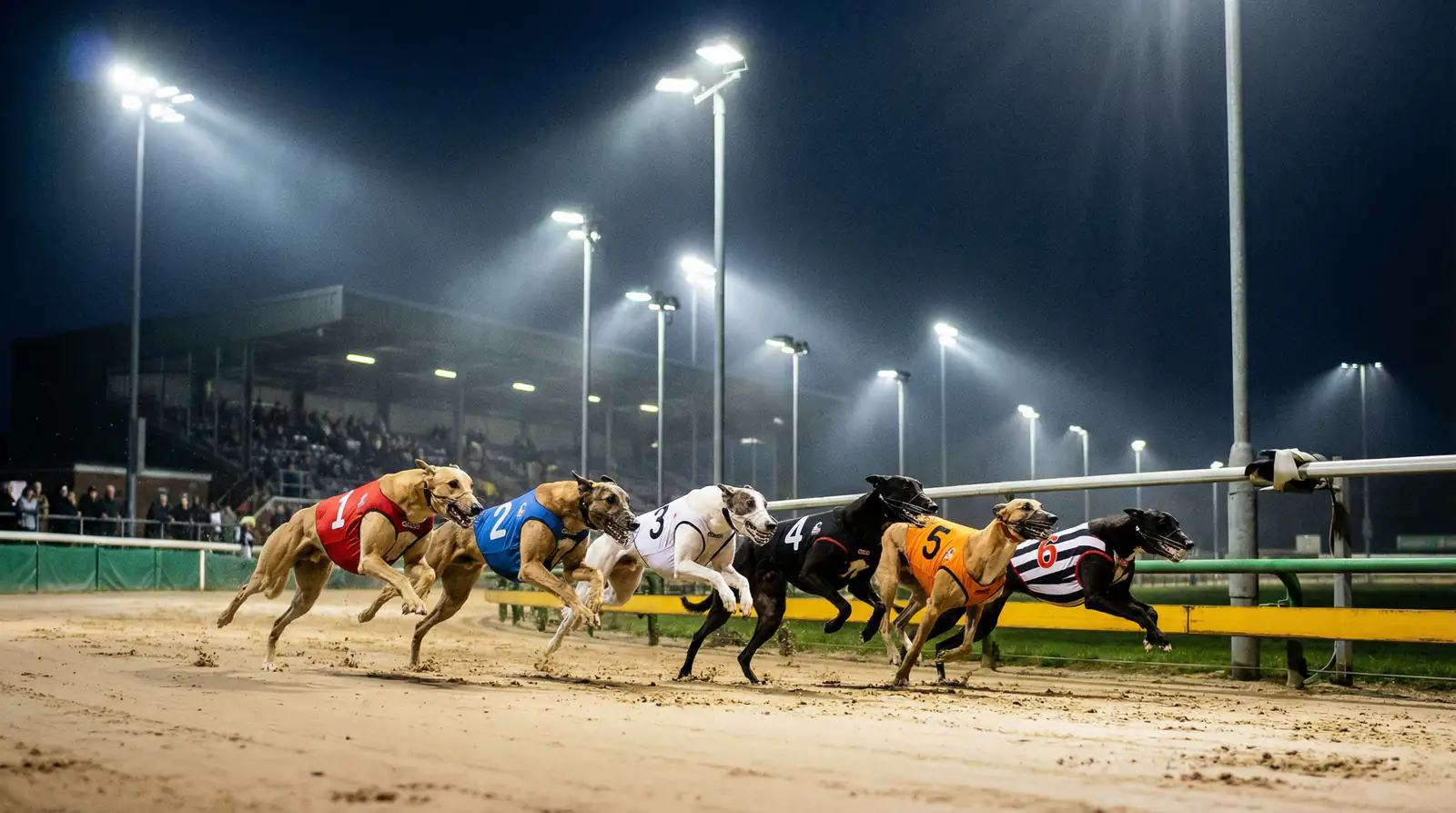
Live Greyhound Racing in the UK: Not a Slow Sport
Six dogs. Thirty seconds. One bend decides everything. Greyhound racing compresses more betting action into a shorter window than any other sport in Britain, and it does it dozens of times a day, every day of the week, across tracks from Newcastle to Romford. If you have never watched a live greyhound race, the speed of it is the first thing that hits you. These are not horses cantering to the start. The traps open, the dogs explode, and within three or four seconds the first bend has already separated the leaders from the field. By the time most punters have looked up from their racecard, the race is halfway over.
That intensity is what makes UK greyhound racing both compelling and misunderstood. The sport runs over sixty GBGB-sanctioned meetings every week across eighteen licensed tracks, generating more individual race events than any other British sport. Yet for many people it remains invisible — a working-class pastime filed somewhere between darts and stock car racing. That perception is outdated. The 2026 racing calendar features daily coverage across multiple streaming platforms, a grading system that creates genuine competitive structure, and a betting market sophisticated enough to reward serious form study. This is not a niche novelty. It is a fully developed sport with a fully developed betting ecosystem, and this guide exists to walk you through every layer of it.
What follows covers everything from finding today's races and watching them live, through reading a racecard and understanding what the numbers mean, to the betting markets themselves and the form analysis that separates punters who guess from punters who calculate. Whether you are placing your first greyhound bet tonight or sharpening an approach you have used for years, the structure here moves from the basics to the edge — and the edge is where the value lives.
UK greyhound racing by the numbers
Over 60 meetings per week across 18 GBGB-registered tracks. Racing runs from morning BAGS cards through to evening Premier meetings. Every race is live-streamed through at least one platform. Six dogs per race, four standard distances, a grading system from A1 to A11 plus sprint and staying categories. Approximately 60,000 individual races per year — more than any other UK sport.
How UK Greyhound Racing Works
The mechanics are deceptively simple — until you start betting. Every race features six greyhounds, each assigned to a numbered trap with a corresponding coloured jacket. A mechanical lure — the hare — runs along an outside rail, triggering the traps to open simultaneously. The dogs chase the lure around a sand track over a set distance, and the first past the post wins. No jockeys, no tactics from a rider, no mid-race decisions. The outcome is determined entirely by the dog's speed, its trap position, its racing line through the bends, and whatever happens when six animals travelling at up to forty-five miles per hour hit the first corner together.
🐾 Trap & Distance Analyzer
Formkurve · Box · Fair Odds
Ein Hund, der über 480 m dominiert, kann über 660 m versagen – und die Trap-Position (Box 1–6) ist ebenso entscheidend. Gib die historische Performance deines Hundes über verschiedene Distanzen und aus verschiedenen Traps ein – der Rechner zeigt, welche Kombination wirklich zu ihm passt und wo die Buchmacher-Quote Value bietet.
That simplicity is what makes greyhound racing accessible. It is also what makes it deceptive. Because the races are short and the fields are small, every variable carries disproportionate weight. A slow start from the traps costs more in a thirty-second race than it would over a mile and a half on the flat. A poor draw on the outside means running two or three extra metres through every bend — distance that translates directly into lost lengths. The sport rewards punters who understand these compressed dynamics, and it punishes those who treat every six-dog race as a coin toss.
Sprint
262–285m. Two bends. Pure speed. Trap draw dominant. Races last roughly 15–17 seconds.
Standard
440–480m. Four bends. The core of graded racing. Most form data relates to this trip. Typically 27–30 seconds.
Staying
630m and beyond. Six-plus bends. Stamina matters. Pace judgement and track position outweigh raw speed. 38–45+ seconds.
Race Structure: Traps, Distances and Grading
Every GBGB race is run from starting traps numbered one through six, positioned across the track with trap one on the inside rail and trap six widest. The dogs are loaded into their traps and held until the hare passes, at which point the lids spring open simultaneously. There is no staggered start and no handicap system — all six dogs cover the same distance from their respective traps. The distance from the traps to the first bend varies by track and starting position, and this geometry is one of the most consequential factors in the outcome.
Distances fall into three broad categories. Sprints cover approximately 262 to 285 metres over two bends and are decided almost entirely by trap speed and the initial break. Standard-distance races — the backbone of the graded programme — run over roughly 440 to 480 metres around four bends. Staying races cover 630 metres and beyond, sometimes stretching past 860 metres at tracks that offer marathon trips. Each distance category produces fundamentally different racing, and form from one does not transfer neatly to another.
The grading system is how GBGB creates competitive racing. Dogs are graded based on their recent times over the standard distance at their home track. Grades run from A1 at the top through A11 at the bottom, with separate sprint grades (D1, D2, etc.) and staying grades (S1, S2, etc.) for non-standard distances. Open races sit above the graded system and attract the best dogs regardless of grade. When a dog runs faster, it gets promoted; when it slows down, it gets relegated. This is not a cosmetic label — it determines which dogs a runner faces, and understanding grade context is essential for evaluating any result.
Trap Colours and What They Mean
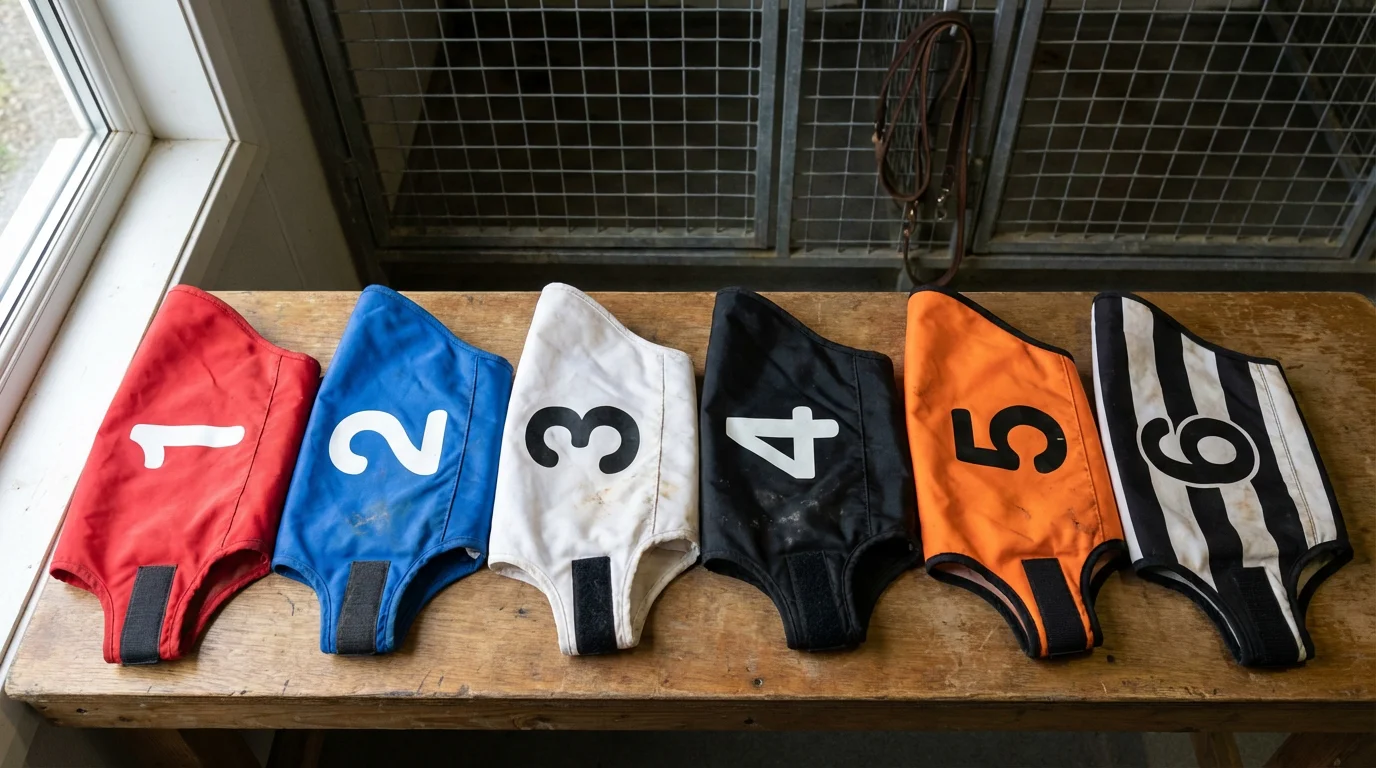
Each trap corresponds to a fixed jacket colour, and these colours are universal across every GBGB track in Britain. Trap 1 is red, trap 2 is blue, trap 3 is white, trap 4 is black, trap 5 is orange, and trap 6 is black and white stripes. These are not decorative — they are functional identification markers that allow spectators, commentators and punters to track individual dogs at speed. When six greyhounds are bunched through a bend at forty miles per hour, colour is the only reliable way to distinguish them.
From a betting perspective, the trap number matters more than the colour. But the visual association between colour and position becomes instinctive with experience. Experienced trackgoers identify runners by jacket colour without conscious thought, and it shapes how they watch a race in real time. If you are new to greyhound racing and watching a live stream, knowing the colours turns a blur of motion into a readable race.
Today's UK Greyhound Racing Schedule
The card runs from morning to late evening — here is where the action is. Unlike horse racing, which clusters its meetings into afternoon slots, greyhound racing in the UK operates across three distinct time bands that between them cover most of the waking day. On a typical weekday in the 2026 season, the first traps open before midday and the last race finishes after ten at night. At weekends the schedule expands further, with some tracks staging multiple sessions.
This structure exists because greyhound racing serves two overlapping audiences: the betting-shop market, which needs content throughout the afternoon, and the evening audience of trackgoers and online bettors who watch racing as a standalone event. Understanding which type of meeting you are watching — and betting on — matters, because the quality of fields, the level of coverage, and the availability of data all vary between them.
BAGS Meetings: Morning and Afternoon Racing
BAGS stands for Bookmakers' Afternoon Greyhound Service, and it is the commercial engine of the sport. BAGS meetings are funded by contributions from licensed bookmakers and exist primarily to provide live betting content for high-street and online operators. These meetings typically run from late morning through the afternoon, with first races kicking off around 10:30 or 11:00 and continuing until roughly 16:30. Tracks including Central Park, Sunderland, Kinsley and Yarmouth feature prominently on the BAGS rota.
The racing at BAGS meetings is genuine GBGB-regulated competition — the dogs are real, the grades are real, and the form is recorded the same way. But the atmosphere is different from evening meetings. Crowds are thinner, trackside betting volume is lower, and the fields sometimes include dogs in the lower grade bands. For punters, BAGS meetings can actually offer value precisely because they attract less sophisticated money. The odds are set by fewer opinions, and sharp form readers who spot a class-drop or a trap advantage can find prices that evening markets would not allow.
Evening and Premier Meetings
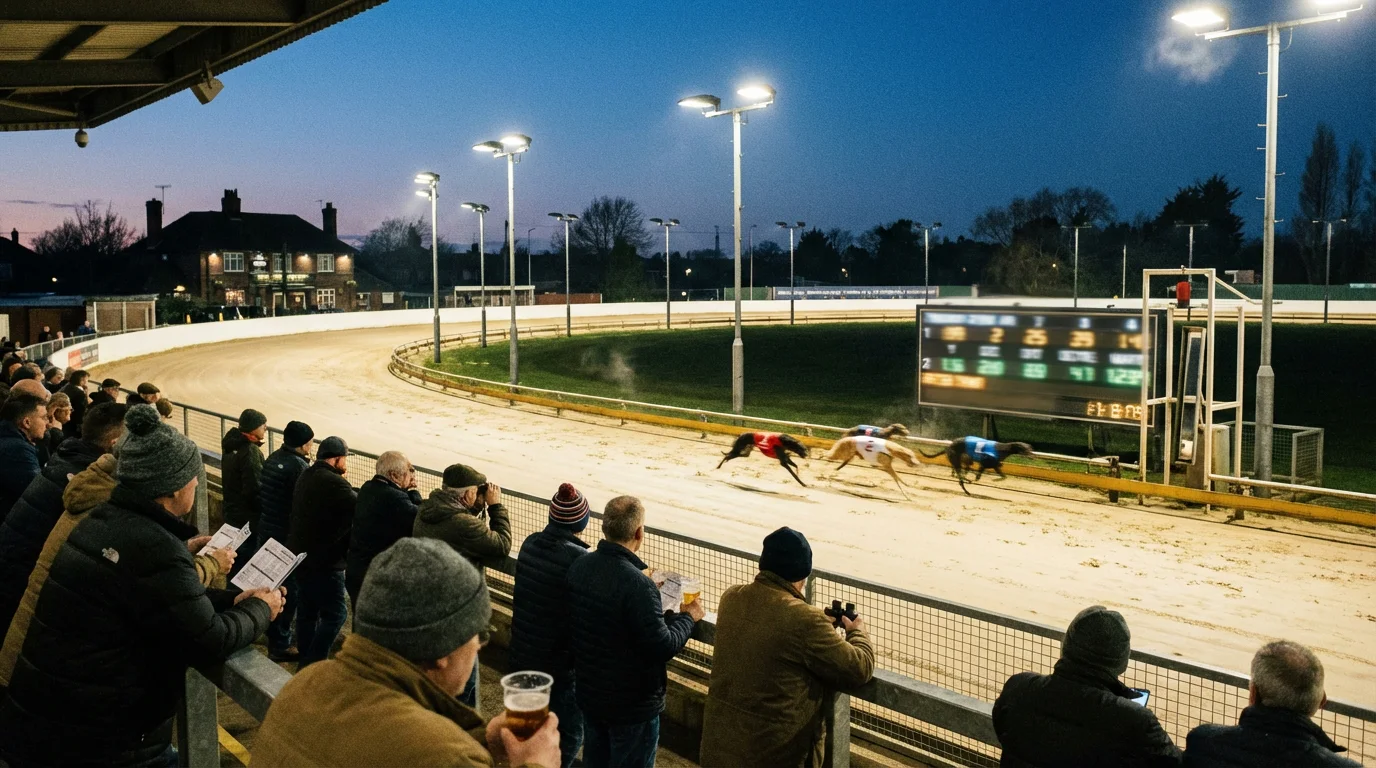
Evening meetings are where greyhound racing feels most like an event. First races typically go off between 18:30 and 19:15, with the last race around 22:00. These meetings draw the largest trackside crowds, the strongest graded fields, and the most comprehensive TV and streaming coverage. Tracks like Romford, Hove, Monmore Green and Towcester host evening cards that regularly feature upper-grade races and open competitions.
Premier meetings sit at the top of the evening hierarchy. These are broadcast on Sky Sports Racing and attract the highest-quality fields, the biggest prize funds, and the largest betting turnover. Major category-one events — the English Greyhound Derby, the Oaks, the St Leger — are Premier fixtures. For punters, the elevated coverage means better data availability, more detailed racecards, and on-screen analysis that adds context you will not get at a midweek BAGS meeting.
UK greyhounds race approximately 60,000 times per year, across more than 3,000 meetings — more individual competitive events than any other professional sport in Britain, including football, horse racing and cricket combined.
How to Watch Live Greyhound Racing Today
Every race is streamed — if you know where to look. One of greyhound racing's quiet advantages over other sports is that virtually every GBGB meeting is available to watch live, either through a bookmaker account, a dedicated TV channel or a streaming service. There is no pay-per-view barrier for individual races and no blackout on domestic fixtures. If the traps are opening somewhere in Britain today, you can watch it happen in real time from your phone, laptop or television.
The three main routes to live coverage are bookmaker streaming platforms, Racing Post Greyhound TV and Sky Sports Racing. Each offers different levels of access, different depths of coverage, and different requirements for entry. The right choice depends on whether you want to watch casually, bet actively, or follow the sport in depth.
Bookmaker Streams
Available through bet365, Coral, Ladbrokes, William Hill and others. Requires a funded account or a qualifying bet placed within the last 24 hours. Covers all BAGS and SIS meetings. No subscription fee. Picture quality varies. Best for punters who are actively betting and want to watch the race they have money on.
RPGTV and Sky Sports Racing
RPGTV is available free on Freeview, Freesat and Sky. Covers evening meetings with studio presentation, expert analysis, pre-race paddock shots and post-race interviews. Sky Sports Racing covers Premier fixtures and major events, available to Sky subscribers. Best for following the sport as entertainment with analytical depth beyond a bare stream.
Live Streaming via Bookmakers
The most common way to watch live greyhound racing in the UK is through a licensed bookmaker's website or app. bet365, Coral, Ladbrokes and William Hill all offer live streaming of GBGB meetings. The typical requirement is that you hold a funded account — meaning you have deposited money — or that you have placed a bet on any event within the preceding 24 hours. Some operators require a minimum stake on the specific race you want to watch; others only need an active account balance.
The streams are delivered through SIS (Sports Information Services), which holds the broadcast rights for BAGS and most daytime meetings. Picture quality is functional rather than cinematic — you will clearly see the dogs and their colours, but do not expect the production values of a Sky Sports broadcast. The streams are low-latency, which matters if you are betting and want to watch the finish unfold close to real time. The main advantage of bookmaker streaming is accessibility: if you already have a betting account, you already have live racing.
RPGTV, Sky Sports Racing and SIS
Racing Post Greyhound TV broadcasts live evening meetings with full studio presentation. The channel is free to air via the SportyStuff platform on Sky, Freesat and Freeview, and it provides the most comprehensive editorial coverage of any greyhound platform — pre-race analysis, trap-by-trap assessments, paddock coverage and post-race commentary. If you want to learn how experts evaluate greyhound form in real time, RPGTV is the best classroom available.
Sky Sports Racing covers Premier greyhound meetings alongside its horse racing programming. The production quality is the highest of any greyhound coverage in the UK, with slow-motion replays, sectional time graphics and on-screen form data. Access requires a Sky Sports subscription. For the serious greyhound bettor who wants maximum data alongside their viewing, Sky Sports Racing on Premier nights is the gold standard.
SIS operates as the backbone of bookmaker-delivered greyhound coverage, supplying live race feeds to betting shops and online platforms. You will not watch SIS directly as a standalone channel — it is embedded within bookmaker streaming interfaces. But if you are watching a daytime race through a betting site, SIS is the infrastructure making it happen.
How to Read a Greyhound Race Card
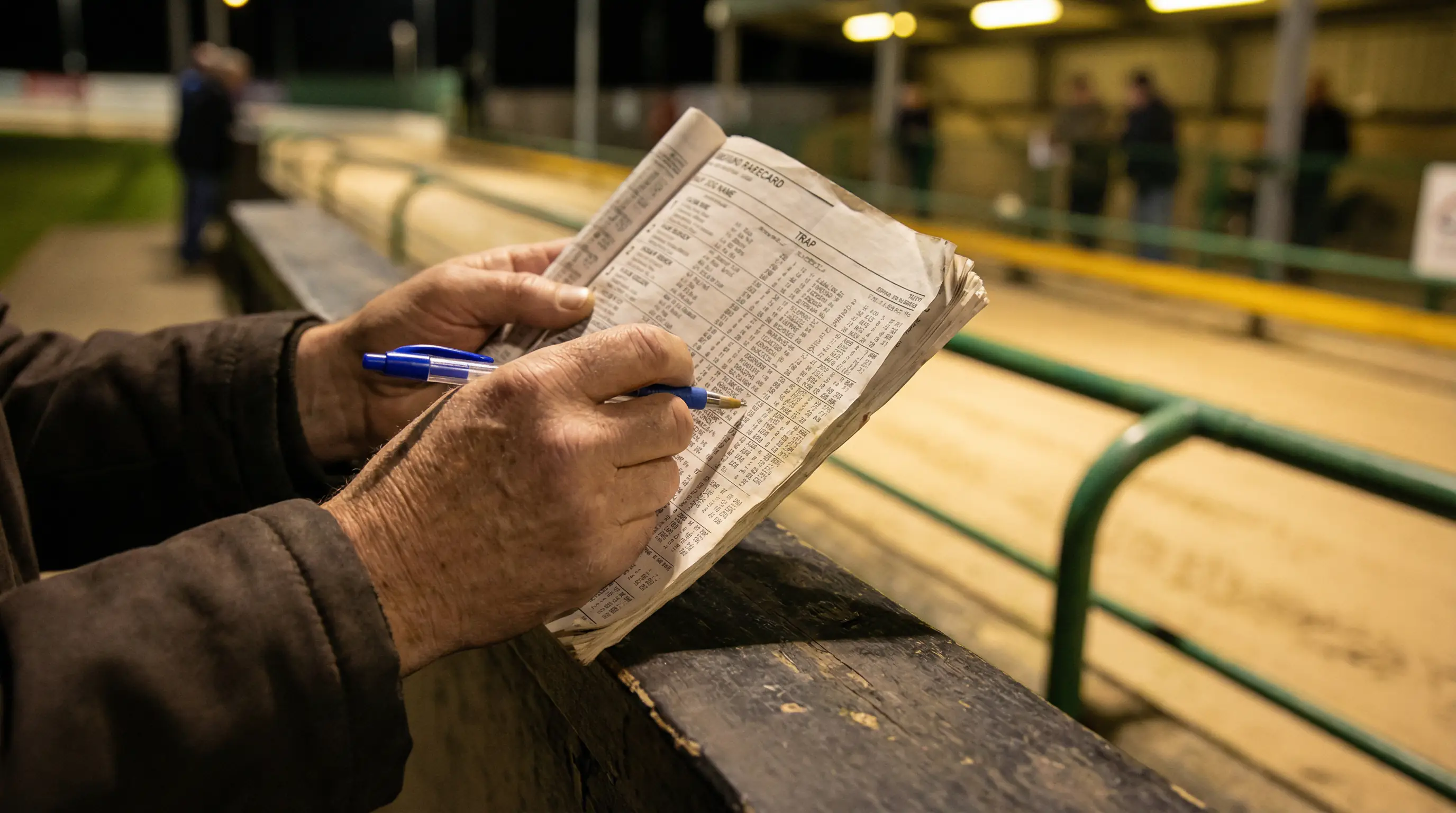
The race card is a compressed biography of each runner. Every piece of data on it exists because someone, somewhere, found it useful for predicting what a greyhound would do next. The problem for newcomers is that the card presents all of this information at once, in a dense format that assumes familiarity. Crack the code, though, and the racecard becomes the single most powerful tool available to any greyhound bettor — more reliable than tips, more granular than odds, and entirely free.
A standard GBGB racecard lists each of the six runners with the following information: trap number and colour, the dog's name, its trainer, its recent form figures (a string of finishing positions from previous races, most recent on the right), its best recent time over the distance, its weight in kilograms, its grade, any race comments from recent runs, and the going adjustment or calculated time. Each element tells a different part of the story. The skill is in reading them together.
Annotated racecard line: Trap 3 — Ballymac Doris
Form: 2-1-1-3-2 (finished 2nd, 1st, 1st, 3rd, most recently 2nd). Consistently competitive — no finishes below third in five starts.
Best time: 28.45 (over 480m standard trip). A strong time for A3 grade — competitive in any four-bend race below open class.
Weight: 28.2kg. Stable — within 0.3kg of her recent average. No concerns.
Comments: EP, Crd3 (early pace shown, crowded at bend three last time). She was leading or close to the lead when interference cost her. A clear run from trap 3 could see her go one better.
Calculated time: 28.31 (adjusted for going). Faster than the raw time suggests — the track was riding slow that night.
Split Times and Sectional Positions
The split time — sometimes called the sectional time or first-bend time — is the most underused piece of data on the racecard. It records how quickly a dog reaches the first timing point, usually located at or just after the first bend. This single number tells you more about a dog's early pace than any number of form figures, because it isolates the opening phase of the race from everything that happens afterwards.
A dog that runs a fast split but finishes fourth has almost certainly encountered trouble in running. The split confirms it had the speed to lead or press the leader, and the finishing position tells you something went wrong between the first bend and the line. That dog is likely underpriced on form figures alone, because most casual bettors fixate on where a dog finished, not where it was at the critical moment. Conversely, a dog that posts a slow split but wins may have inherited the lead after the pace dogs knocked each other out on the first turn. That win is less reliable than it looks.
When comparing dogs across a race, line up their split times first. The dog with the fastest split from a favourable trap draw is, statistically, the most likely leader at the first bend. At most UK tracks, the leader at the first bend wins more than forty per cent of the time — a massive edge in a six-dog race. This is why split-time analysis is the foundation of serious greyhound form study.
Race Comments and Abbreviations Decoded
Race comments are compressed narratives of what happened during a race, and they appear alongside each dog's form entry on the card. They use standardised abbreviations that are consistent across all GBGB tracks. Learning them is not optional if you want to read form properly — they contain information that finishing positions cannot convey.
The most important abbreviations are QAw (quick away, meaning the dog broke fast from the traps), SAw (slow away, a poor start), EP or EPace (early pace, the dog was prominent in the opening stages), Crd (crowded, the dog was squeezed or impeded), Bmp (bumped, physical contact with another runner), Led (led the race at some point), RnUp (ran up to the leader without passing), and RlsStt (rails to straight, the dog hugged the rail until the final straight).
Reading comments in sequence across a dog's recent form reveals patterns. A dog that shows QAw, Led in three of its last five runs is a habitual front-runner — its trap draw becomes critical because it needs a clear run to the first bend. A dog with SAw in consecutive races might be developing a trapping issue that no amount of form analysis can fix. A dog showing Crd from wide traps but Led from inside traps is telling you exactly where it needs to be drawn. These patterns are invisible in the form figures alone.
Betting on Greyhound Racing: What You Need to Know
Greyhound betting rewards speed of mind, not just speed of dog. The betting markets on a typical six-runner greyhound race are simpler than horse racing in some respects — smaller fields, fewer variables, shorter odds ranges — but they are not simple. The compressed nature of each race means the margins between a winning bet and a losing one are thinner, and the frequency of racing (twelve to fourteen races per evening meeting, sometimes more) creates a tempo that encourages impulsive staking. The punters who profit over time are the ones who treat each race as a discrete decision, not part of a session they need to "get level" on.
Every licensed UK bookmaker offers greyhound betting, both online and through high-street shops. The major operators — bet365, Coral, Ladbrokes, William Hill, Betfair, Paddy Power — cover all GBGB meetings, usually from the morning BAGS cards through to the last evening race. Markets typically open thirty to sixty minutes before a race, and the odds fluctuate as money comes in. By the time the traps open, the starting price (SP) reflects the aggregate of all opinions.
Romford 480m A3 — Race 8
Trap 1: Droopys Expert — 7/2
Trap 2: Lenson Bolt — 5/1
Trap 3: Ballymac Doris — 3/1
Trap 4: Highfield Donut — 6/1
Trap 5: Signet Ace — 4/1
Trap 6: Toolmaker Blaze — 8/1
A five-pound win bet on Trap 3 at 3/1 returns twenty pounds (fifteen pounds profit plus five-pound stake). A five-pound each way bet costs ten pounds total: five on the win at 3/1 and five on the place (first or second) at one-quarter the odds (3/4). If Ballymac Doris wins, the total return is twenty-three pounds seventy-five (fifteen win profit plus three seventy-five place profit plus the five-pound stakes). If she finishes second, the place part returns eight seventy-five — a loss of one twenty-five on the total ten-pound outlay, but a recovery of most of the stake.
Core Bet Types: Win, Each Way, Forecast, Tricast
The win bet is the simplest: pick the dog you think will finish first. In a six-runner field, the arithmetic is stark — a dog at even money needs to win more than fifty per cent of the time to be profitable. At 3/1, it needs to win more than twenty-five per cent of the time. The favourite in a typical graded greyhound race wins around thirty to thirty-four per cent of the time nationally, which means blind favourite backing is a slow road to loss. Selective win betting, where you only back dogs whose form gives them a higher chance than their odds imply, is the only viable approach.
An each way bet combines a win bet and a place bet on the same dog. Standard greyhound each way terms are one-quarter the odds for first and second. It makes most sense at odds of 4/1 or higher, where a second-place finish returns enough to cover most or all of the total stake. Below 3/1, the place return is usually too small to justify doubling your outlay.
A forecast requires predicting the first two finishers. A straight forecast means predicting them in exact order; a reverse forecast covers both possible orders and costs twice the stake. Forecast dividends at greyhound meetings can be substantial because the six-runner field creates enough permutations for surprise results to produce large payouts. A tricast predicts the first three finishers in order — a harder task, but one that delivers the biggest returns when it lands. Combination forecasts and tricasts cover multiple permutations of your selected dogs, increasing your chances at the cost of a higher total stake.
How Greyhound Odds and SP Work
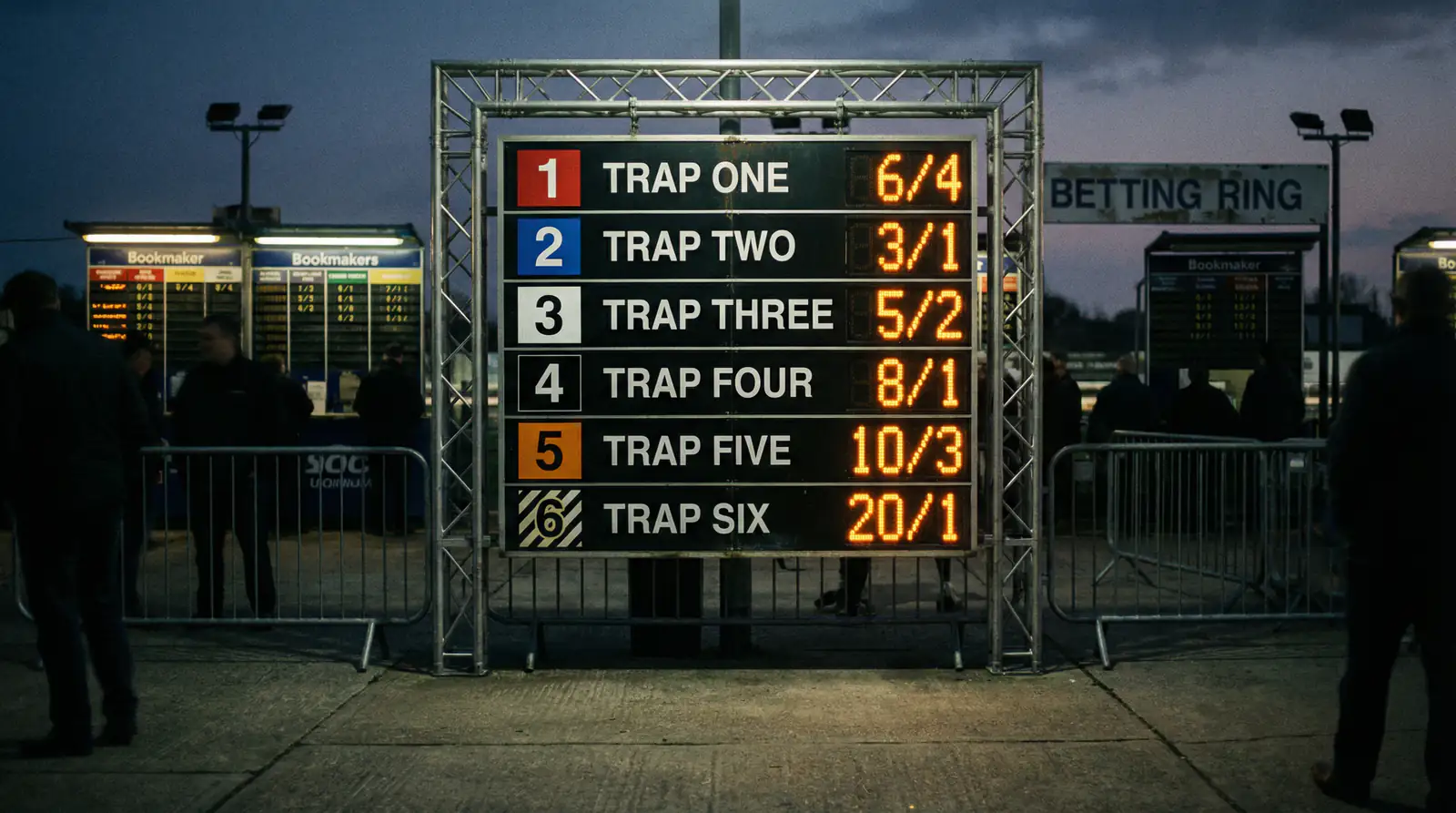
Greyhound odds in the UK are displayed in fractional format (3/1, 5/2, 7/4) on most platforms, though decimal odds are available on all major bookmaker sites. The fraction tells you the profit relative to your stake: 3/1 means three pounds profit for every one pound staked. The implied probability is the reciprocal: 3/1 implies a 25 per cent chance of winning (1 divided by 4). When the implied probabilities of all six runners add up to more than 100 per cent — and they always do — the difference is the bookmaker's margin.
The starting price (SP) is the final odds available at the moment the traps open, as recorded by the official SP assessors. If you take a price early (an "early price" or "ante-post"), you are locked in at those odds regardless of how the market moves. If you take SP, you get whatever the final price turns out to be. Best Odds Guaranteed (BOG) is a bookmaker feature that gives you the higher of your early price and the SP — if you take 4/1 early and the SP drifts to 5/1, you are paid at 5/1. BOG is available at most major UK bookmakers for greyhound racing and is one of the few promotional features that delivers genuine mathematical value to the punter.
Form Analysis: What Separates Sharp Bettors
Anyone can read a time. Fewer can read a race. The difference between casual greyhound punters and profitable ones is not access to secret information — it is the systematic application of publicly available data. Every racecard published by the GBGB contains the same information for everyone. The edge comes from how you process it: which numbers you prioritise, which patterns you recognise, and which narrative the race comments tell beneath the surface of the form figures.
The approach that follows is not complicated, but it requires discipline. It is built on three pillars: trap draw analysis (understanding how starting position interacts with running style), early pace evaluation (using split times to identify likely leaders), and class assessment (reading grade movements for hidden ability). None of these is sufficient alone. Applied together, they produce a picture that odds and form figures by themselves never reveal.
Before you bet: five checks in order
- Check the trap draw against each dog's running style. A railer in trap 1 has a structural advantage. The same dog in trap 5 is fighting geometry.
- Compare split times across the field. The fastest split from a favourable draw is your likely first-bend leader — and the first-bend leader wins disproportionately often.
- Read the race comments from the last three runs. Look for trouble patterns: repeated crowding from wide draws, habitual slow starts, or signs that a dog has been unlucky rather than slow.
- Check recent grade movements. A dog dropping from A3 to A4 after a run of bad luck is a potential value play. A dog rising from A5 to A4 after one fast time may be overmatched.
- Assess trainer form. Some kennels run hot for weeks. Others go cold. Trainer strike rates over the last fourteen days are a legitimate signal, especially at tracks where one or two kennels dominate.
Trap Draw: The Single Most Important Factor
The trap draw is the single biggest structural advantage or disadvantage a greyhound carries into any race. It is not the only factor — a fast dog from a bad draw will still sometimes win — but across thousands of races, the statistical evidence is overwhelming. Inside traps produce higher win rates at sprint distances. Outside traps face longer routes through the bends. And the interaction between a dog's natural running line (railer, middle, wide) and its drawn trap position creates a set of race-shape scenarios that experienced punters evaluate before they look at anything else on the card.
A railer — a dog that naturally runs close to the inside rail — is at its best drawn in traps one or two. It hugs the shortest route through every bend and rarely encounters traffic on the rail. That same dog drawn in trap five or six has to cross the path of other dogs to reach its preferred position, creating crowding risk at the first bend. A wide runner drawn in trap six has a clear outside path and can avoid first-bend scrimmaging, but it runs extra distance on every corner. Middle runners are the most versatile but also the most vulnerable to being squeezed between railers cutting in and wides rolling out.
The data is public and trackable. Most form databases and racecard providers list each dog's preferred running position alongside its form figures. The punter who cross-references this running style with the trap draw before every race is doing something that the majority of betting-shop punters do not bother with — and that asymmetry of effort is exactly where value lives.
Early Pace and the First Bend Equation
Greyhound racing is a first-bend sport. The leader at the first corner wins more often than any other position in the field — across UK tracks, the figure sits consistently above forty per cent, and at tighter circuits it can exceed fifty per cent. This is not intuition or folk wisdom. It is statistical fact, borne out by tens of thousands of race results every year. The first bend is where the six-dog field gets compressed, where traffic problems occur, and where the dog with a clear run through the turn gains lengths that trailing dogs rarely recover.
Early pace — the speed at which a dog breaks from the traps and reaches the first bend — is therefore the most predictive single metric in greyhound form. You can assess it through split times (the lower the number, the faster the break), through comments (QAw, EP, Led are all indicators of front-running ability), and through visual observation if you are watching races. A dog that consistently shows early pace from favourable draws is a dog that consistently gives itself the best chance of being in front where it matters most.
The practical application is this: before any race, identify the most likely first-bend leader by combining split times with the trap draw. If that dog is also the form pick on times and grades, it is a strong bet. If the likely leader is not the form pick — if a slower dog holds the pace advantage from a better draw — the race is more open and the favourite may be vulnerable. That is the first-bend equation, and it applies to every greyhound race you will ever bet on.
UK Greyhound Tracks: Where the Racing Happens
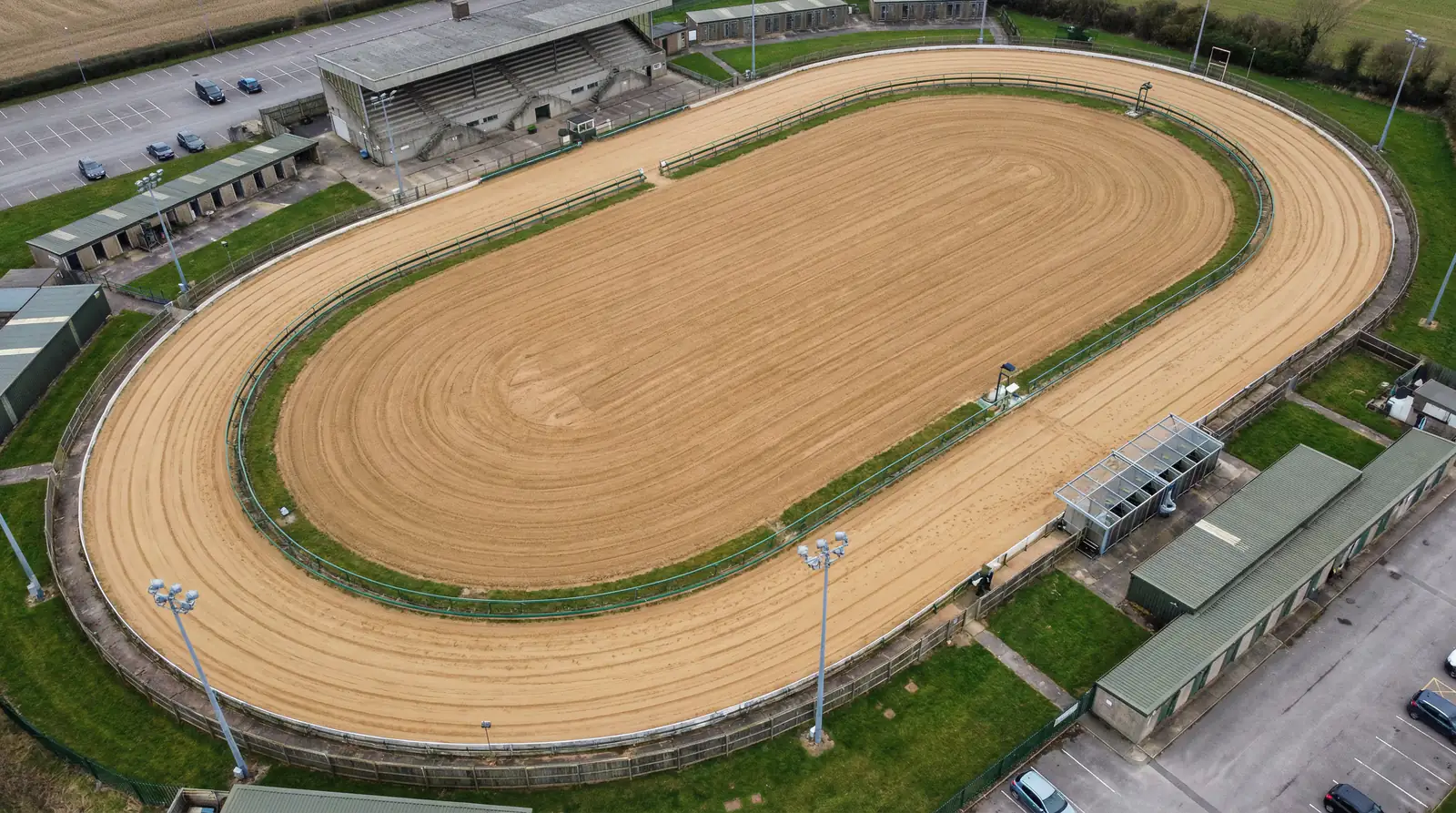
The tracks define the sport — each one shapes the race differently. There are eighteen GBGB-registered greyhound tracks currently operating in Britain, spread from Newcastle in the north to Romford and Hove in the south. They vary in circumference, surface characteristics, bend tightness and distance availability, and these physical differences produce measurably different racing. A dog's form at one track does not automatically transfer to another, which is why experienced greyhound bettors always factor in track specifics before backing a runner at an unfamiliar venue.
Romford is arguably the most high-profile GBGB track, located in east London with tight bends that favour inside runners and fast breakers. It hosts Premier meetings and major open races, making it the closest thing greyhound racing has to a flagship venue. Hove, on the south coast, runs a wide galloping track that gives outside runners more chance than most circuits — form from Hove is often more transferable to other wide tracks. Monmore Green in Wolverhampton is a medium-sized oval that produces competitive graded racing in the Midlands, while Towcester, the sport's newest major venue and home of the English Greyhound Derby, offers a larger-circumference track that rewards stamina and stride length over pure trap speed.
In the north, Newcastle and Sunderland provide regular evening and BAGS racing, with Newcastle's Brough Park a traditional stronghold of northern greyhound culture. Central Park (Sittingbourne), Henlow and Yarmouth fill out the southern and eastern fixtures, each with their own circuit characteristics and trap biases. Sheffield (Owlerton Stadium) hosts category-one events such as the Steel City Cup, cementing its place as a major-events venue. Towcester is the home of the English Greyhound Derby and has staged the sport's showpiece final since 2021. The 2026 GBGB calendar maintains all eighteen licensed tracks, with fixture distribution reflecting both commercial demand and geographic coverage across England and Wales.
Track knowledge is the closest thing greyhound racing has to inside information — it is publicly available and wildly underused. Every track publishes trap statistics, distance records and grading data through the GBGB. Knowing that trap one at Romford wins twenty-two per cent of 400m races while trap six wins thirteen per cent is not a secret — it is open data. The edge is in actually using it, which most punters do not.
Quick-Fire Tips for Betting on Today's Races
You have read the form. You know the tracks. Now sharpen it all into a decision.
Forget systems — focus on these five things before every race. Greyhound betting does not reward complexity. It rewards consistency in applying a small number of principles that the data supports over thousands of races. These are not predictions or selections for specific races. They are structural habits that shift the long-term maths in your direction.
Prioritise the trap draw over everything else. Before you look at form figures, times or odds, assess whether each dog's running style suits its drawn position. A railer in trap one with modest form is a better structural bet than a faster dog drawn wide that needs luck to get a clear first bend. The trap draw is the only variable that is fixed before the race starts.
Respect early pace. The dog with the fastest split time from a favourable draw is, statistically, the most likely winner. This does not mean it will always win, but it means the odds should reflect its first-bend advantage. If the market offers a front-running dog at prices longer than its split-time advantage warrants, that is value.
Bet graded races before opens. Graded races group dogs of similar ability, which means the form data is more reliable and the grade context more readable. Open races attract runners from different tracks, different grades and sometimes different distances, making cross-form comparison harder. If you are building your form-reading skills, graded races are the place to start.
Watch for class drops. A dog dropping from A3 to A4 is not necessarily declining — it may have had a run of bad draws, crowding or slow trapping that suppressed its finishing times without reducing its underlying ability. Check the split times and race comments. If the sectionals are still quick and the comments explain the poor finishes, the class drop is creating value that the market may not have priced in.
Manage your bank. Decide your stake before you see the odds. Greyhound racing runs twelve to fourteen races per meeting, and the temptation to chase losses or increase stakes after a bad run is the single most common reason recreational punters lose money. Set a per-race stake that represents no more than two to five per cent of your session bankroll, and apply it uniformly regardless of how confident you feel. Discipline does not guarantee profit, but indiscipline guarantees loss.
Greyhound Racing: Your Questions Answered
How do I watch live greyhound racing in the UK today?
The easiest route is through a licensed bookmaker's website or app. bet365, Coral, Ladbrokes and William Hill all stream live GBGB races as part of the SIS feed. You typically need a funded betting account or to have placed a qualifying bet within the last twenty-four hours. There is no additional subscription or per-race fee. For evening meetings with full studio coverage, RPGTV is free to air via the SportyStuff platform on Sky, Freesat and Freeview. Premier fixtures and major events are also broadcast on Sky Sports Racing, which requires a Sky subscription. Between these three sources — bookmaker streams, RPGTV and Sky — virtually every GBGB meeting running today is accessible live.
What does the trap draw mean and why does it matter?
The trap draw is the starting box position assigned to each dog, numbered one (inside rail) through six (widest). It matters because it determines the route each dog takes through the first bend, and the first bend is the most decisive moment in most greyhound races. Dogs drawn on the inside have a shorter path through the corner, while dogs drawn wide must cover extra ground and are more vulnerable to being squeezed out. Crucially, the impact of the draw depends on each dog's natural running style — a railer drawn in trap one has a structural advantage, while the same railer drawn in trap five faces a longer path to its preferred position. Evaluating the trap draw against running style is the single most important analytical step before placing a bet.
How do greyhound racing odds and starting prices work?
Greyhound odds represent the potential return on a bet relative to the stake. UK bookmakers display odds in fractional format by default — 3/1 means three pounds profit for every one pound staked. The starting price (SP) is the final official odds at the moment the traps open. If you take an early price (placing your bet before the race), you are locked in at those odds even if the market moves. Many UK bookmakers offer Best Odds Guaranteed (BOG) on greyhounds, which pays the higher of your early price and the SP — protecting you from price drift in either direction. Odds are set by the bookmaker's traders based on form, trap draw and expected market demand, then adjusted as bets come in before the race.
After the Last Trap: What the Dogs Teach the Punter
The best greyhound bettors are not the ones who pick the most winners. They are the ones who make the fewest avoidable errors. That distinction matters more in a sport with twelve-race cards running several times a week than it does in a sport where you place one or two bets on a Saturday. Greyhound racing offers so many opportunities to bet that the discipline to say no — to watch a race without money on it, to skip a card where the form is unclear, to accept a losing night without chasing — is worth more than any analytical edge.
There is a particular pleasure in watching a greyhound race with no bet on it. You see things differently. You notice how the hare speed affects the break, how certain dogs switch off when they lose the lead, how the track surface changes through the meeting as the sand gets churned up. These observations are useless in isolation, but over weeks and months they build a reservoir of understanding that sharpens every future assessment you make. The punters who watch more than they bet develop an intuition that is not mystical — it is pattern recognition earned through attention.
Everything in this guide is a tool, not a formula. The trap draw gives you an edge, not a certainty. Split times reveal ability, not destiny. Class drops create value, not guarantees. Greyhound racing, at its core, is six animals doing something unpredictable in a controlled environment, and the controlled part is what makes it analysable while the unpredictable part is what makes it worth watching. The punters who understand both sides of that equation — who bring discipline to the analysis and humility to the outcome — are the ones who stay in the game long enough to profit from it.
Somewhere in Britain tonight, traps will open and six dogs will run. The card is already published. The form is there to read. Whether you watch for entertainment, bet for profit, or stand trackside because the sound of a sprint finish is unlike anything else in sport, the next race is always coming. Make sure you are ready for it.
