Greyhound Racing for Beginners: Everything You Need to Know
Complete beginner's guide to greyhound racing — how it works, the rules, how to attend, trap colours, basic betting, and your first night at the dogs.
 Available in US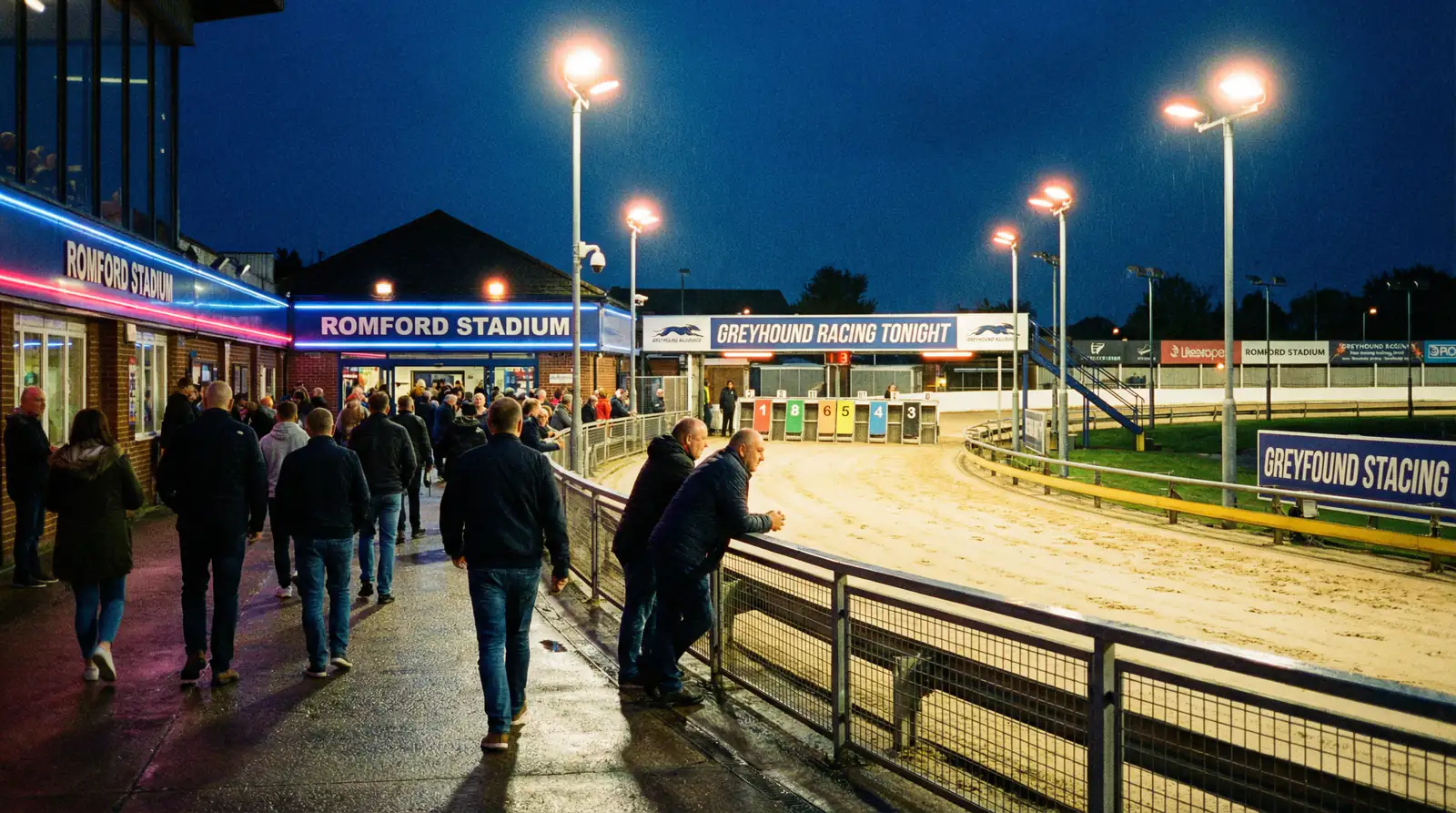
Welcome to the Track
Greyhound racing is one of the most accessible sports in Britain and, at the same time, one of the least understood by people who have never been. The stereotype — dingy stadiums, flat beer, questionable crowds — belongs to a different era. The reality in the 2020s is a structured, professionally run sport with live streaming, digital racecards, and a daily programme of racing that operates from morning to late evening across venues throughout England.
If you are approaching greyhound racing for the first time, whether you plan to attend a track or watch from home through a bookmaker stream, the learning curve is shorter than you might expect. A greyhound race involves six dogs, a mechanical hare, a sand track, and roughly thirty seconds of action. The rules are simple. The form is readable. The betting is straightforward. What gives the sport its depth — and what keeps experienced punters engaged for years — is the analysis beneath the surface: draw, pace, grading, track bias, and the variables that separate a thoughtful bet from a random one.
This guide covers everything you need to enjoy your first evening of greyhound racing, whether that evening takes place trackside or on your phone.
Your First Visit: What to Expect at the Track
A greyhound meeting at a UK track is a straightforward evening out. Most tracks stage evening meetings starting between 7:00 PM and 7:30 PM, with the last race typically around 10:00 PM. A full card runs twelve to fourteen races, each separated by ten to fifteen minutes. The pace is brisk — there is always something about to happen — and the evening has a rhythm that quickly becomes natural.
Admission varies by track. Some venues charge a modest entry fee, typically between five and ten pounds. Others offer free entry, particularly for meetings that are not designated as feature or Premier cards. Many tracks offer packages that include a meal, a racecard, and a reserved table, which are popular for social groups and first-time visitors. Checking the track’s website before attending will clarify pricing, dress codes (most tracks are relaxed — smart casual is more than sufficient), and any booking requirements for restaurant areas.
Once inside, the facilities follow a standard pattern. There is a public viewing area, usually terraced or open-air, where you can watch the races from the trackside rail. Indoor areas with screens, seating, and bar service provide a warmer alternative. The tote windows or machines allow you to place pool bets on-course, and most tracks also have bookmaker representatives or self-service terminals for fixed-odds betting. A printed racecard — available at the entrance or from sellers around the track — is your guide to the evening.
The atmosphere is social rather than intense. Greyhound meetings attract a mix of regular punters, casual visitors, social groups, and families. The crowd is typically smaller than a football match or a horse racing festival, which makes the experience relaxed and easy to navigate. You do not need to know anyone, understand the form, or have a betting strategy to enjoy the evening. The dogs are impressive athletes, the racing is fast, and the noise when six greyhounds round the first bend at full speed is genuinely thrilling the first time you hear it.
The Basic Rules: Six Dogs, One Winner
A standard greyhound race involves six dogs, each wearing a coloured jacket that corresponds to its trap number. The colours are standardised across all UK tracks: trap one is red, trap two is blue, trap three is white, trap four is black, trap five is orange, and trap six is black and white striped. These colours make it easy to follow your selection during the race even if you cannot see the trap numbers.
The dogs are loaded into individual starting traps, numbered one (closest to the inside rail) through six (closest to the outside). When the mechanical hare passes the traps at speed, the doors open simultaneously and the dogs chase the lure around the track. A standard race covers four bends — one complete circuit — and the distances range from approximately 450 to 500 metres depending on the venue. Sprint races cover two bends, staying races cover six.
The first dog to cross the finish line wins. If there is a close finish, the judge determines the order using a photo-finish camera, and the official result is announced after a brief delay. Distances between finishers are measured in lengths and fractions of lengths, where one length equals roughly 0.08 seconds at racing pace.
Before each race, the dogs are paraded in front of the crowd or shown on screen. This parade lets you see the dogs in the flesh — their physical condition, their demeanour, their weight and coat. Experienced punters use the parade to confirm or adjust their pre-race assessments. As a beginner, it is simply a chance to see the animals up close before they race, which adds a connection to the action that studying a racecard alone cannot provide.
Races are graded, meaning the six dogs in each race are matched by ability. The grading system ensures that races are competitive rather than one-sided. This is why the betting markets on most greyhound races show competitive odds rather than a single overwhelming favourite — the racing office has done its job of assembling a balanced field.
Placing Your First Bet
The simplest bet in greyhound racing is a win single. You choose one dog in one race, and if it finishes first, you win. Your return is calculated by multiplying your stake by the odds. If you back trap three at 4/1 with a two pound stake and it wins, you receive ten pounds — eight pounds of profit plus your two pound stake returned.
Each way betting is the natural second step. An each way bet is two bets in one: a win bet and a place bet. If your dog wins, both bets pay out. If it finishes second (which counts as a place in greyhound racing), the win bet loses but the place bet pays at a fraction of the win odds — typically one quarter. Each way costs double the unit stake because it is two separate bets. It is a sensible option when you think a dog has a good chance of finishing in the first two but you are not fully confident it will win.
To place a bet at the track, you can use the tote (pool betting) or the on-course bookmakers and self-service terminals. For tote bets, you select the pool type — win, place, forecast — and the dog number, and feed your stake into the machine. For fixed-odds bets, the process is the same as in a betting shop: select the dog, choose your stake, confirm the bet. If you are watching from home, the same bets are available through any major bookmaker’s website or app.
A reasonable first-bet strategy is to set a budget for the evening — say, twenty to thirty pounds — and divide it across several races rather than putting it all on a single selection. Two to three pound stakes on selected races allow you to experience the betting across the card without risking an uncomfortable loss. You do not need to bet on every race. Watching a few races without a bet lets you understand the rhythm of the evening before committing money.
What to Watch For: A Beginner’s Eye on the Form
The racecard can look intimidating at first glance — a grid of numbers, abbreviations, and codes that mean nothing without context. As a beginner, you do not need to decode the entire card. Focus on three things.
First, look at the recent finishing positions. Each dog’s last few results are listed as numbers: 1 for a win, 2 for second, and so on. A dog that has finished first and second in its last three runs is in better recent form than one that has finished fifth and sixth. This is not sophisticated analysis — it is pattern recognition — but it gives you a starting point for identifying the contenders.
Second, check the trap draw. Dogs drawn in traps one and two at most tracks have a statistical advantage because they are closest to the inside rail. If you are choosing between two dogs with similar form and one is drawn in trap one while the other is in trap six, the inside draw gives the first dog an edge, particularly at tracks with tight bends.
Third, look at the odds. The betting market is a collective assessment by other bettors and the bookmaker of each dog’s chance of winning. The favourite — the dog with the shortest odds — is the one the market considers most likely to win. Favourites do not always win — they lose more often than they win, in fact — but they win more often than any other single runner. Backing the favourite is not an exciting strategy, but it is a defensible one for a first evening.
As you gain experience, the racecard opens up further: split times reveal early pace, running comments explain why a dog finished where it did, weight figures track physical condition, and trainer names start to carry meaning. None of this is necessary on your first night. All of it becomes available as your interest develops.
Your First Night: Enjoy It
The single most useful piece of advice for a first-time greyhound racing experience is to enjoy it without pressure. Set a modest budget. Bet small or do not bet at all on the first few races. Watch the dogs, listen to the commentary, absorb the atmosphere. The sport reveals itself quickly — within three or four races, you will understand the rhythm, recognise the trap colours, and have a sense of which dogs are running well and which are struggling.
Greyhound racing rewards curiosity. The more you watch, the more you notice: how the first bend shapes the race, how the draw affects positioning, how certain dogs run from the front while others close from behind. These observations are the beginning of form analysis, and they happen naturally when you pay attention. No textbook is necessary. The racing teaches you, one thirty-second lesson at a time.
Whether your first evening is at a track under the floodlights or on a screen through a bookmaker’s stream, the experience is the same sport offering the same invitation. Six dogs, one bend, half a minute. Everything else builds from there.
Start your greyhound racing journey on the livegreyhoundtoday homepage.
Progress to our full how-to-bet guide in how to bet.
