Ante Post Greyhound Betting: Early Odds on Major Races
How ante post betting works for greyhound racing — which major events offer early markets, risks and rewards, and strategies for pre-race value bets.
 Available in US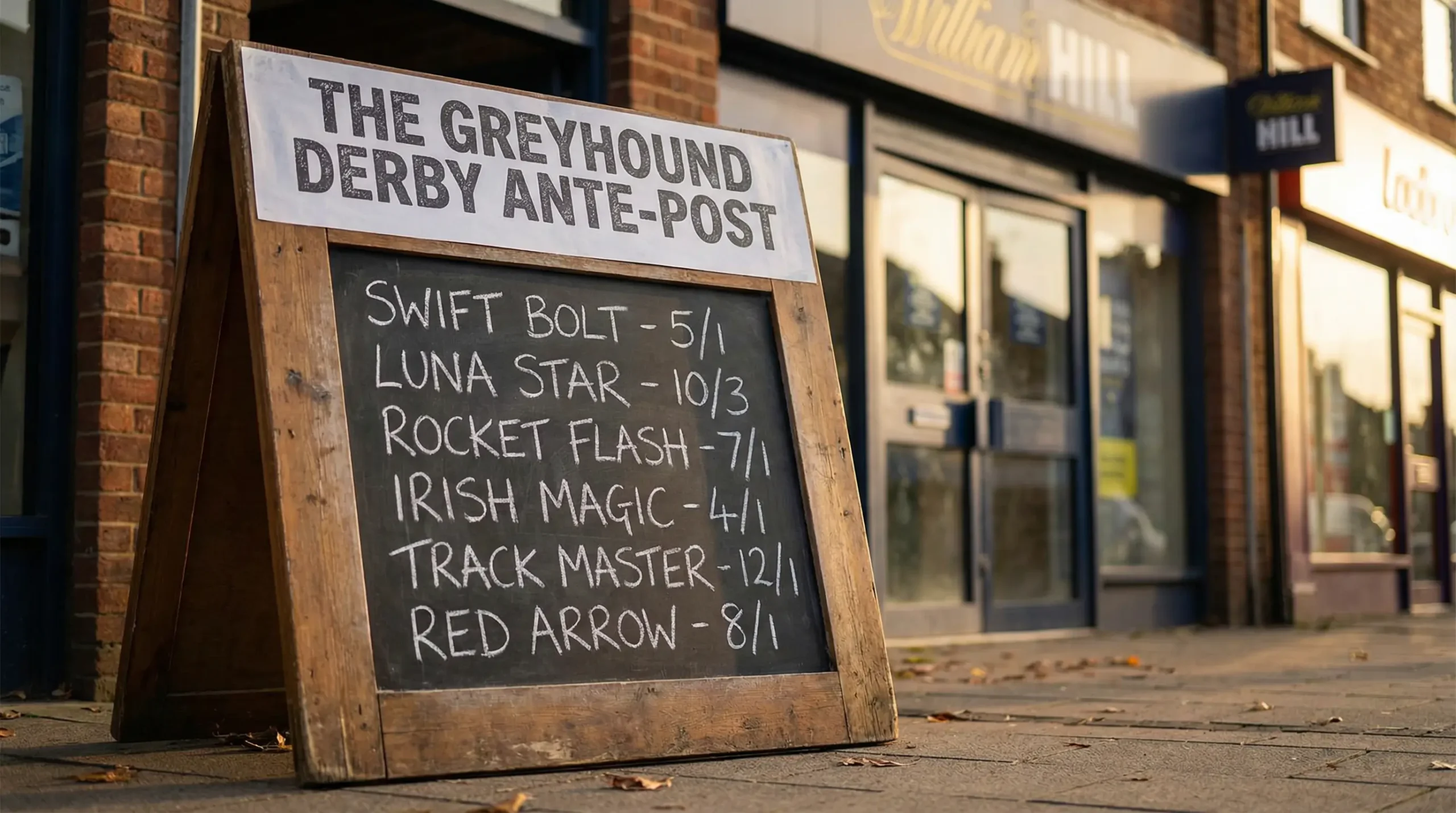
Betting Before the Off — Sometimes Weeks Before
Most greyhound bets are placed within hours of a race, often within minutes. The racecard goes live, the market forms, the prices settle, and punters make their selections in a compressed window that reflects the rapid-fire nature of the sport. Ante post betting operates on an entirely different timescale. It is the practice of backing a greyhound in a future event — days, weeks, or even months before the competition takes place — at odds that reflect the uncertainty of the extended timeline.
Ante post markets exist for greyhound racing’s major competitions: the English Greyhound Derby, the St Leger, the Cesarewitch, and other Category One and Category Two events that attract national attention and significant betting interest. These are the sport’s showpiece occasions, and the ante post market surrounding them adds a dimension of engagement that ordinary race-day betting does not provide.
The appeal is the price. Ante post odds are typically longer than the odds available on the day of the race, because they carry additional risk that shorter-range betting does not. Understanding what that risk involves, when ante post value genuinely exists, and how to approach these markets without overpaying for uncertainty is the difference between sharp early-market betting and expensive guesswork.
What Ante Post Means in Practice
An ante post bet is a wager placed before the final declarations for a race or competition. In greyhound racing, this means betting on the outright winner of a multi-round event before the heats have been drawn, before the qualifying rounds have been run, and sometimes before the entries have been confirmed. You are backing a dog to win a competition that may involve four or five rounds of racing over several weeks, at a price set before any of those rounds have taken place.
The critical distinction between ante post and standard betting is the non-runner rule. In most ante post markets, if your selection does not participate in the event — due to injury, withdrawal, failure to qualify, or any other reason — your stake is lost. There is no refund. The bet is void only if the entire competition is cancelled, not if your individual dog fails to take part. This is the fundamental risk that justifies the longer odds.
Some bookmakers offer “non-runner no bet” terms on selected ante post greyhound markets, which refunds your stake if the dog does not run. These markets carry shorter odds than standard ante post — the bookmaker is pricing in the insurance — but they eliminate the most painful outcome of ante post betting: losing your money without your selection even appearing on the track. Where NRNB terms are available, they shift the risk calculus significantly and often represent the better option for bettors who are uncomfortable with the non-runner exposure.
Ante post bets are typically settled on the final of the competition, regardless of the dog’s performance in earlier rounds. If you back a dog ante post to win the Derby, it must win the final. Reaching the semi-final or finishing second in the final does not produce a return on a win bet. Each way ante post bets, where available, pay out on a dog placing in the final — typically first, second, or third — at a fraction of the win odds.
Major Events with Ante Post Markets
The English Greyhound Derby is the centrepiece of the ante post calendar. It is the sport’s most prestigious competition, attracting the best greyhounds in Britain and Ireland over a multi-week programme of heats, quarter-finals, semi-finals, and the final. Ante post markets for the Derby typically open several weeks before the first heats, with bookmakers pricing up a field of potential contenders based on open-race form, trial performances, and kennel reputation.
The St Leger, run over a staying distance, carries its own ante post market and attracts a different profile of contender. Stayers with proven form over six bends are the natural candidates, and the ante post market reflects the smaller pool of genuine contenders at this specialist distance. The Cesarewitch, the Oaks, the Puppy Derby, and other Category One events each produce their own ante post interest, though the depth of the market and the number of bookmakers offering prices varies by event.
Category Two events and feature open races at individual tracks occasionally attract limited ante post betting, but the markets are thinner and the odds are less well-formed. The richest ante post opportunities are concentrated in the sport’s biggest competitions, where the betting volume is sufficient to produce competitive pricing and where the multi-round format creates the uncertainty that makes early prices generous.
The ante post calendar follows the racing season, with the Derby typically staged in the summer and other major events distributed throughout the year. Keeping track of when entries close, when heats are drawn, and when qualifying rounds take place allows you to time your ante post bets around the key information points — backing early enough to secure a good price, but late enough that the most obvious risks have been eliminated.
Risk and Reward: Why Ante Post Prices Are Longer
Ante post odds are longer than day-of-race odds for three reasons, each of which represents a genuine risk to the bettor.
The first is non-participation. A greyhound is a fragile athlete. Injuries occur in training and in racing, and they can strike at any point between your ante post bet and the final. A dog that is a leading contender in March may be sidelined by a muscle tear in April and never appear in the competition. Your ante post stake is gone. This risk is not theoretical — it is a routine feature of multi-week greyhound competitions, and every ante post bettor will experience it repeatedly over a career.
The second is the draw. Major competitions use random ballot draws for each round. A dog might sail through the heats with a favourable inside draw and then face a trap six draw in the semi-final that significantly reduces its chance of reaching the final. You cannot know the draw when you place the ante post bet, and the draw can eliminate a contender as effectively as an injury.
The third is competition form. A dog that looked like a Derby contender based on its January and February performances may not sustain that form through May and June. Greyhounds have form cycles — periods of peak performance followed by dips — and the gap between the ante post bet and the final is long enough for a form cycle to turn against you. The dog may be healthy, may draw well, and still not produce its best when it matters.
The combined effect of these risks is that a significant proportion of ante post bets lose without the bettor being “wrong” in any analytical sense. You identified a genuine contender. It got injured. You read the form correctly. The draw was unfavourable. Ante post betting requires tolerance for this kind of loss, which is qualitatively different from the loss that comes from backing the wrong dog on race night. The longer odds compensate for this, but only if you approach the market with appropriate expectations.
Ante Post Strategy: When and What to Back
The optimal ante post bet combines a dog with a genuine chance of winning the competition with a price that overcompensates for the risks involved. This sounds straightforward. In practice, it requires discipline at two points: selection and timing.
Selection should focus on dogs with proven form at the highest level, physical soundness, and a training operation capable of peaking a dog for a specific event. The best ante post candidates are dogs that have already demonstrated open-race ability at the track hosting the competition or over the relevant distance. Trial form is useful but secondary — a dog that has been quietly trialling at sharp times without public attention may represent value that the market has not yet absorbed.
Timing matters because ante post prices change as information emerges. The earliest prices — before entries close — carry the most risk and the longest odds. Once entries are confirmed, the field narrows and prices shorten for the remaining contenders. After the first round of heats, more information is available: how dogs handled the track, what times they produced, which trainers look confident. Each round of the competition removes uncertainty, shortens the odds, and reduces the risk.
The sharpest ante post value is typically found in the window between entry confirmation and the first heats. At this point, you know the dog is entered (eliminating some non-participation risk), but the market has not yet reacted to heat form. If your pre-competition assessment of a dog’s chance is sound, the price available in this window is often the best you will get. Backing earlier means accepting withdrawal risk. Backing later means accepting shorter prices. The post-entry, pre-heat window balances both.
Early Money: The Long Game
Ante post betting is the long game of greyhound wagering. The bets sit open for weeks, the outcomes depend on factors you cannot control, and the emotional experience is entirely different from the compressed intensity of backing a dog thirty seconds before the traps open. Some punters thrive on this. Others find the extended uncertainty uncomfortable and prefer the immediacy of race-day markets.
The punters who profit from ante post betting over time are those who treat it as a selective, small-stakes activity. One or two bets per major competition, at stakes that reflect the elevated risk of loss, on dogs whose chances you have assessed through genuine form analysis rather than reputation or sentiment. The prices you secure in the ante post market will occasionally look generous on the night of the final, when the same dog is available at half the odds you took. Those are the bets that justify the ones that were lost to injury, withdrawal, and the randomness of the draw. The ante post market rewards patience and punishes impulse. It always has.
Explore ante-post greyhound betting on the livegreyhoundtoday homepage.
See which events to target in racing events.
