Major UK Greyhound Races: Derby, Oaks, St Leger & More
Guide to the biggest greyhound racing events in the UK — English Greyhound Derby, Oaks, St Leger, puppy derbies, when they run and how to bet on them.
 Available in US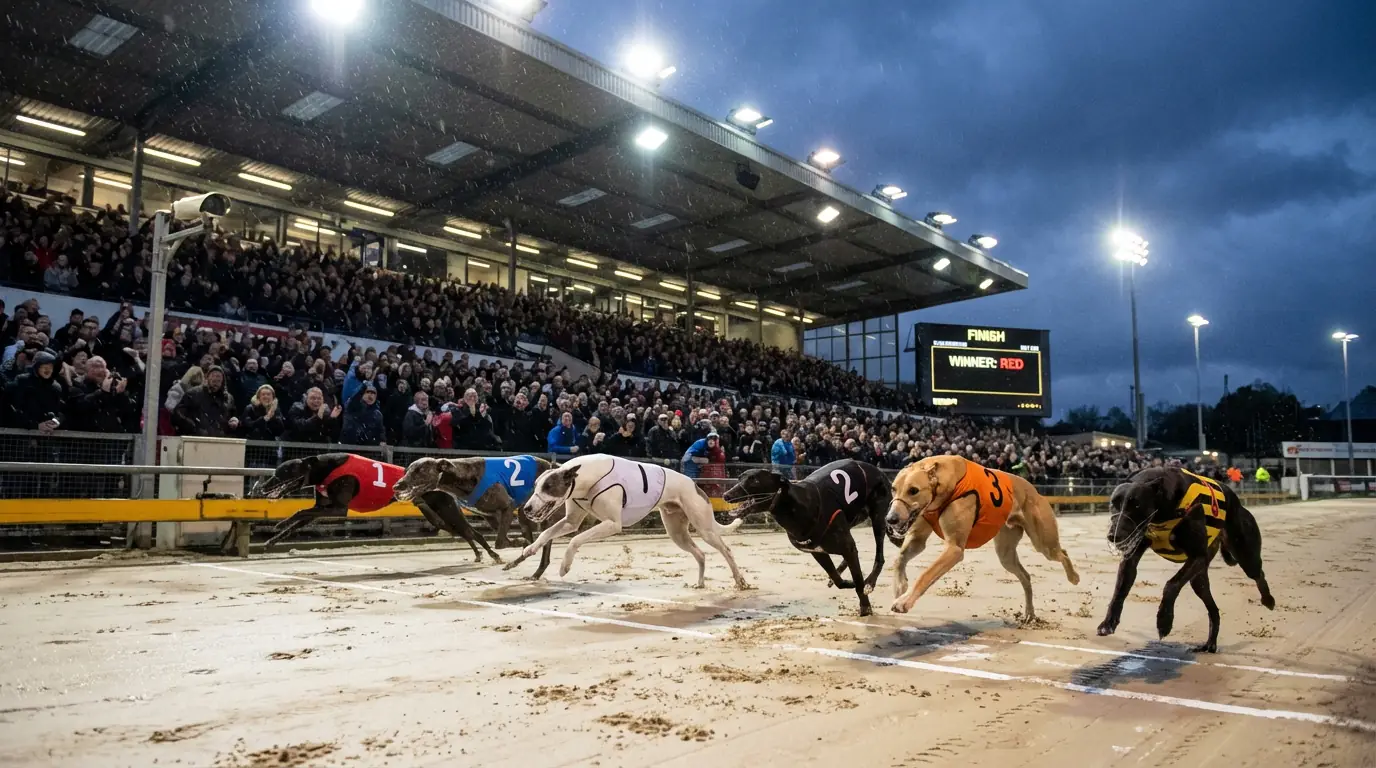
The Nights That Define the Sport
Greyhound racing runs every day, and most of it takes the same form: graded meetings at familiar tracks, regular cards with reliable betting markets, the steady rhythm of a sport that produces more live events per week than almost any other. But scattered through the calendar are the nights that stand apart — the major events that attract the best dogs in Britain and Ireland, generate national media coverage, and produce the performances that define generations of the sport.
These are the Category One and Category Two competitions, and they are to greyhound racing what Group One races are to horse racing: the pinnacle of the competitive pyramid. The prize money is higher, the fields are stronger, the betting markets are deeper, and the quality of racing is a clear step above even the best weekly open events. For bettors, the major events offer a different kind of challenge — more information, more public attention, sharper markets — and a different kind of reward when the analysis lands.
Understanding the structure of the major events calendar, which competitions carry the most prestige, and how the multi-round format affects betting strategy turns these occasions from spectacles into opportunities.
The English Greyhound Derby
The Derby is the single most important event in UK greyhound racing. It has been run annually since 1927, making it almost as old as the sport itself, and winning the Derby remains the highest achievement a racing greyhound and its connections can attain. The competition has been hosted at various venues across its history — White City, Wimbledon, and Towcester among them — and the host track is itself a point of prestige and commercial significance.
The format is a multi-round knockout over several weeks. The competition begins with first-round heats, where a large entry field is divided into races of six dogs. The winners and fastest losers progress to the next round, which narrows the field further through quarter-finals and semi-finals before the six-dog final decides the champion. The entire process typically spans three to four weeks, with each round staged on a separate evening.
The Derby is run over the standard four-bend distance at the host track, which means the dogs are tested over the trip that forms the backbone of British graded racing. There is no distance gimmick or specialist requirement — the Derby winner is simply the best dog over the standard course at the venue. This purity of test is part of what gives the competition its status. The winner has beaten the best available opposition over the sport’s core distance through multiple rounds of competition.
Betting on the Derby operates at a different scale from ordinary meetings. Ante post markets open weeks before the first heats, and the prices contract as each round eliminates contenders and reveals form. The heat draws — allocated by random ballot — generate their own wave of market movement, because a favourable draw in the semi-final can significantly enhance a dog’s chance of reaching the final. By the night of the final itself, the market is as sharp and well-informed as any in greyhound racing, with prices reflecting the full weight of heat performances, draw analysis, and professional assessment.
The Derby final is the sport’s showpiece: a single race, six dogs, thirty seconds, broadcast live on Sky Sports Racing with full studio coverage. The prestige of the event and the quality of the field make it the most-watched and most-wagered greyhound race of the year.
Other Category One Events
The Derby is the flagship, but it is not the only Category One competition on the calendar. Several other events carry the same top-tier classification and attract fields of comparable quality, each testing a different attribute or distance profile.
The St Leger is the premier staying event, run over six bends at a distance that typically exceeds 700 metres. It is the stamina test that the Derby is not, and it attracts a specialist population of stayers whose form over the standard trip may look unremarkable but whose endurance over six bends places them at the top of the staying division. The St Leger winner is the best long-distance greyhound in the country in that year, and the competition holds a unique position in the calendar for punters who follow staying form.
The Cesarewitch, traditionally run over 600 metres, occupies the middle ground between the standard trip and the full staying distance. It tests sustained pace rather than pure speed or deep stamina, and the slightly extended trip produces a different kind of race — one where tactical positioning through the middle bends matters more than in a standard-distance event. The Cesarewitch attracts dogs from both the standard and staying divisions, creating crossover fields that are particularly interesting for form analysis.
The Oaks is the premier event for bitches only, mirroring the Derby in format and status but restricted to female greyhounds. The competition typically runs earlier in the summer season, and the all-female field produces different form dynamics — bitches tend to be lighter and faster early but sometimes less robust through a multi-round competition. The Oaks final is one of the most prestigious single races on the calendar.
Other Category One events include sprint championships, which test the two-bend specialists, and invitation events that bring together the best performers from across the country for a single-night competition. Each carries its own traditions, its own form profiles, and its own betting market. The full Category One calendar typically includes eight to twelve events spread across the year, ensuring that there is always a major competition approaching or underway.
Puppy Events and Rising Stars
The greyhound racing calendar includes a parallel programme of competitions for younger dogs. Puppy events — restricted to greyhounds under a certain age, typically two years old — serve as the proving ground for the sport’s next generation and often provide the first glimpse of a future Derby winner.
The Puppy Derby is the most prominent of these events, following the same multi-round format as the senior competition but with younger, less experienced runners. The form in puppy events is inherently more volatile than in open-age racing. Young dogs are still developing physically and mentally, and their performances can fluctuate dramatically from one round to the next as they mature. A puppy that looks ordinary in the first-round heats may improve markedly by the semi-finals simply because it is growing into its racing frame.
For bettors, puppy competitions present a specific challenge: the form book is thinner, the dogs have shorter racing histories, and the rate of improvement — or regression — between rounds is harder to predict. Trial form and kennel reputation carry more weight in puppy events than in open-age competitions, because the public racing record is limited. Trainers known for producing early-developing puppies have a consistent edge in these events, and their entries deserve close attention regardless of the individual dog’s racecard form.
The betting markets on puppy events are less well-formed than on the senior competitions, partly because the form is harder to assess and partly because fewer specialist punters focus on the age group. This inefficiency creates value for those willing to do the research. A puppy event where you have tracked the trial form, assessed the trainer’s record with young dogs, and accounted for the likely rate of improvement offers a betting proposition that is less sharply priced than the equivalent senior race.
Ante Post Betting on Majors
Major events are the primary arena for ante post greyhound betting, and the multi-round format creates a distinctive price curve that experienced punters learn to navigate. The ante post market opens at its widest before the heats — when the field is large, the draw is unknown, and the non-runner risk is highest — and narrows progressively as each round removes contenders and reveals form.
The strategic question is when to engage. Backing before the heats secures the longest odds but carries the highest risk: your dog might not even run, might draw badly, or might face the strongest opposition in its heat. Backing after the first round sacrifices some price but gains information — you have seen the dog race at the venue, noted its time, and assessed how it handled the draw and the competition. Each subsequent round adds more information and further compresses the odds.
The sharpest ante post punters identify their contenders through pre-competition form analysis — open-race times, trial reports, trainer intelligence — and then wait for a specific trigger before placing the bet. The trigger might be a favourable heat draw, a strong trial time, or a market price that exceeds their assessment of the dog’s true chance. This selective patience avoids the scatter-gun approach of backing several dogs at long prices and hoping one survives, which sounds appealing but rarely produces a positive return after the losing stakes are accounted for.
Each way ante post betting on major events is particularly worth considering. In a competition where the final is a six-dog race and place terms cover the first three, an each way bet gives you a payout if your selection reaches the final and finishes in the first three. Given that reaching the final from a field of dozens already represents a strong performance, the each way component provides a meaningful safety net that straight win betting does not.
The Big Night: Why Major Events Repay Attention
The major events are the occasions when greyhound racing commands its widest audience, its deepest betting pools, and its highest standard of competition. They are also the occasions that reward the most thorough preparation. The multi-round format generates more data per competition than any single meeting — times, draws, running comments, and head-to-head form across several rounds — and the bettor who tracks this data accumulates an information advantage with every round that passes.
These events also produce the moments that stay in the sport’s memory. A dog that comes from behind in the Derby final, a stayer that breaks the track record in the St Leger, a puppy that announces itself with a devastating heat performance — these are the stories that give greyhound racing its narrative and its culture. Following the major events is not just good betting practice. It is how you connect with the sport at its highest level, and that connection makes every ordinary Tuesday evening meeting richer for the context it provides.
Follow all major greyhound racing events on the livegreyhoundtoday homepage.
Plan ante-post bets around these events in ante-post.
