
Greyhound Trainers: How Kennel Form Affects Your Bets
Why greyhound trainer form matters — tracking kennel statistics, trainer specialities, strike rates, and how to factor trainer data into your bets.
 Available in US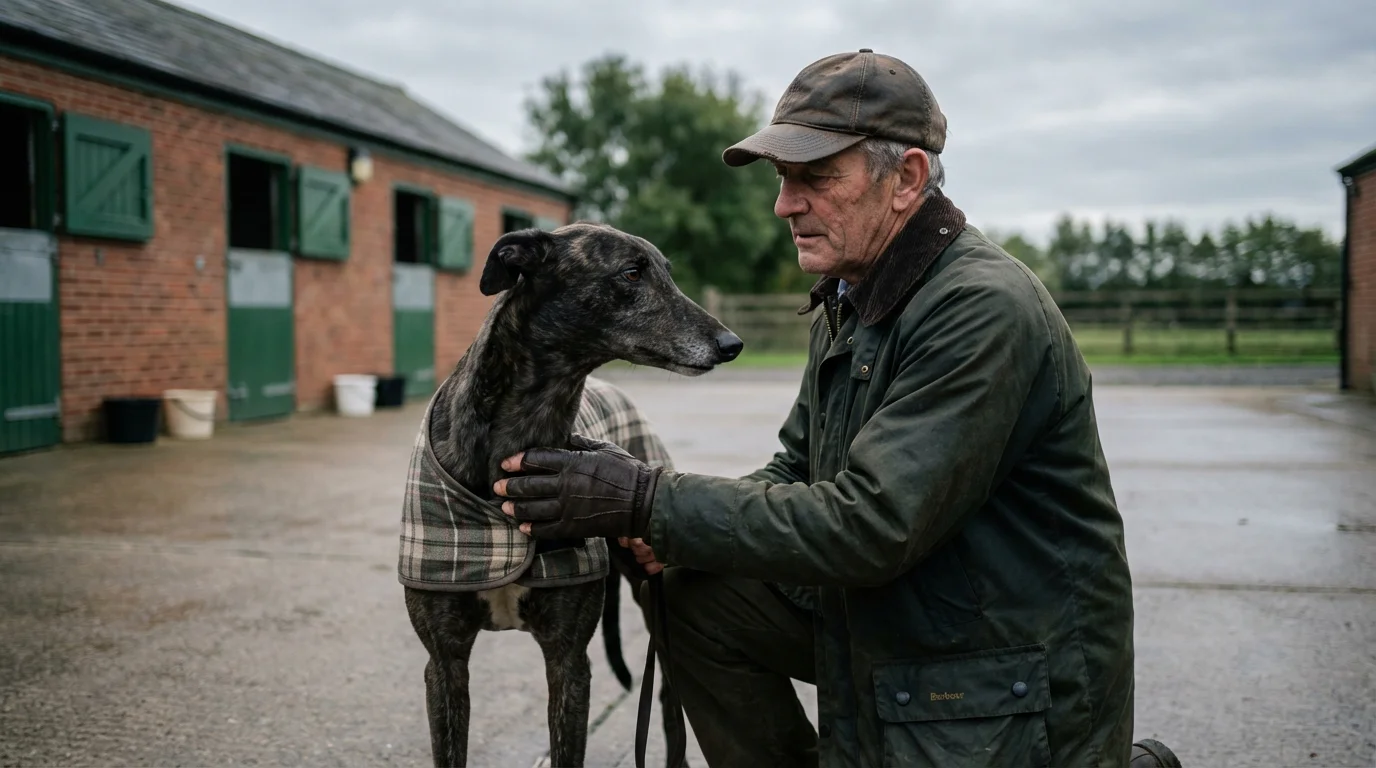
The Name You Overlook on Every Racecard
Every greyhound racecard lists a trainer’s name alongside each runner. Most punters glance at it and move on, straight to the times, the splits, the trap draw. The trainer column feels like administrative data — necessary for the record but irrelevant to the selection process. This is a mistake, and a surprisingly common one given how much influence the trainer has over every aspect of a greyhound’s racing career.
A greyhound trainer manages the dog’s diet, exercise regime, trial schedule, race entries, and day-to-day condition. The trainer decides when a dog is ready to race and when it needs a rest. The trainer communicates with the racing office about preferred distances, running styles, and trap preferences. The trainer is, in practical terms, the intermediary between the raw animal and the racecard data you are studying. Every number on that form line — the time, the weight, the finishing position — is a product of decisions the trainer made in the days and weeks before the race.
Understanding trainer form does not require insider knowledge. It requires the same methodical attention you apply to the dogs themselves. Track which trainers are producing winners, which kennels are in form, and which patterns repeat. The data is public. The edge comes from bothering to look at it.
Why the Trainer Matters More Than You Think
In horse racing, the significance of trainers is well understood. Punters track trainer strike rates, note stable form, and factor the handler’s record into every assessment. In greyhound racing, the same logic applies — arguably more so, because the trainer has a more direct relationship with the animal. A racehorse has a trainer, a jockey, an owner, and a travelling head lad, each influencing the performance. A racing greyhound has a trainer, and that relationship is the dominant one.
The trainer’s influence operates at several levels. At the most basic, the trainer determines the dog’s physical condition. A well-managed greyhound arrives at the track fit, at its optimal weight, and in a state of readiness that translates into peak performance. A poorly managed dog — over-raced, under-exercised, carrying too much weight, or recovering from a minor injury that was not given adequate rest — will underperform its ability regardless of the form figures.
Beyond physical management, the trainer controls the dog’s race programme. Choosing the right races — the right grade, the right distance, the right track — is a skill. Some trainers have a talent for placing their dogs in races they can win. They read the grading system, anticipate the likely opposition, and enter their runners where the conditions suit. Other trainers are less strategic, entering dogs wherever a space exists on the card. The results over time reflect this difference.
The trainer also manages the trial process. Before a dog returns from a layoff, switches tracks, or steps up in distance, it will typically have a trial run that does not appear on the public racecard in the same way. How the trainer interprets the trial — whether the dog is ready to race, needs another trial, or should change approach — directly affects when and where it next appears. Punters who track trainer patterns often notice that certain trainers bring dogs back from layoffs in sharper condition than others, which creates a repeatable betting angle.
Tracking Trainer Statistics
Trainer form can be tracked using the same publicly available data that informs every other aspect of greyhound betting. The Racing Post, Timeform, and specialist greyhound data sites publish trainer records that include win counts, strike rates, and recent form. These statistics reveal which kennels are performing above average and which are in a quiet spell.
The most useful metric is the recent strike rate over the past fourteen to twenty-eight days. A trainer with a twenty percent strike rate over the last fortnight is producing winners at a rate significantly above the random baseline and is likely managing a kennel of dogs in strong collective condition. A trainer whose strike rate has dropped from fifteen percent to five percent over the same period may be dealing with illness in the kennel, a batch of dogs past their peak, or operational issues that are suppressing performance across the board.
Strike rate alone is insufficient. A trainer running thirty dogs per week with a ten percent strike rate is producing three winners. A trainer running eight dogs per week with a twenty percent strike rate is also producing roughly two. The first trainer’s kennel is larger and more active; the second’s is smaller but more selective. Both approaches can be profitable for bettors, but the interpretation differs. The larger kennel’s form is spread across more entries, which dilutes the signal. The smaller kennel’s form is concentrated, which makes individual entries more meaningful.
Profit and loss to starting price is a more revealing metric where available. A trainer whose runners show a positive return to SP is producing value — their dogs are winning at prices that overcompensate for their losses. This is rarer and more significant than a high strike rate, because it means the market is underestimating the trainer’s runners. Trainers with consistent positive returns to SP are worth following closely, and their runners deserve a second look even when the individual form does not scream winner.
Kennel Specialities and Track Preferences
Not all trainers operate identically, and understanding a trainer’s specific strengths adds a layer of nuance to the statistical overview. Some trainers specialise in sprinters, producing dogs with explosive early pace that dominate over two bends. Others build their kennel around stayers, dogs with the stamina and temperament for six-bend races. The specialisation often reflects the trainer’s location and the tracks they primarily race at.
Track preference is one of the most underused trainer data points. A trainer based near Romford who races the majority of their dogs at that venue will know the track intimately — the surface quirks, the trap biases, the racing manager’s tendencies. Their dogs will be trialled and conditioned for that specific circuit. When this trainer enters a dog at a track they rarely visit — perhaps sending a runner to Hove or Newcastle for a feature race — the unfamiliarity may count against performance. Conversely, runners from trainers who consistently place well at a specific venue carry an implicit endorsement that the dog suits the track.
Some trainers develop reputations for producing dogs that improve significantly after a kennel move. A dog that has been performing indifferently for one trainer may arrive at a new kennel and show immediate improvement — sharper times, better weight, more consistent finishes. These transformations are not random. They reflect the new trainer’s management style, exercise regime, or dietary approach unlocking performance that was previously suppressed. Tracking which trainers regularly improve incoming dogs is a powerful, if patience-intensive, form angle.
Other trainers are known for their ability to peak dogs for specific events. In the weeks leading up to a major competition — a Category One event, a high-value open race — certain trainers produce trial performances and qualifying times that suggest their runners are reaching optimal condition at precisely the right moment. This is a training skill, and the trainers who possess it tend to appear disproportionately often in the latter stages of prestigious competitions.
Trainer Moves: Reading Between the Lines
When a greyhound changes trainers, the racecard records the transfer. What it does not record is the reason. Dogs move between kennels for many reasons — the owner wants a different approach, the previous trainer’s kennel is full, the dog needs a change of environment, or the trainer and owner have parted ways professionally. The reason for the move matters less than what happens next.
A dog arriving at a new kennel typically has a settling-in period. Its first run for the new trainer may not reflect its true ability because it is adjusting to different feeding, different exercise, a different kennel environment. The second and third runs are more telling. If the dog improves markedly in its second start for a new trainer, the move is working. If it continues to run below expectations, the change has not solved whatever was holding it back.
Certain trainer-to-trainer moves carry implicit significance. A dog transferring from a smaller kennel to one of the sport’s leading operations is likely being given a higher level of professional management, and improvement is the expected outcome. A dog moving from a major kennel to a less prominent one may be doing so because the top trainer has decided the dog does not merit the kennel space — which is itself a form judgement worth noting.
The market often overreacts to kennel moves, shortening the price of a dog that has joined a fashionable trainer before the dog has done anything to justify the support. Equally, a dog leaving a well-known kennel may drift in the market even if the new trainer is perfectly capable. These misalignments create opportunities. The data that resolves them — how the dog actually performs for the new trainer — arrives within two or three races, and the punters who track those early runs are first to the adjustment.
Kennel Knowledge as a Compounding Edge
Trainer form is not a single-bet edge. It is a compounding one. The more you track kennel statistics, the more familiar you become with the patterns — which trainers bring dogs back from layoffs in winning condition, which produce consistent runners but rarely spectacular ones, which peak their stars for the biggest nights. This knowledge builds incrementally and applies to every racecard you study.
The practical habit is straightforward. When studying a racecard, check the trainer’s recent form alongside the dog’s. If the kennel is running hot — winners in the last week, a strike rate above its average — the individual runner benefits from that momentum. If the kennel is cold — few winners, poor placings across multiple entries — even a well-fancied dog may not overcome the collective downturn. The trainer column is context. It does not override the form. It frames it, and the framing changes the picture often enough to justify the few extra seconds it takes to look.
Research greyhound trainer form on the livegreyhoundtoday homepage.
Use trainer data in your ante-post selections in ante-post.
